

-
 by Certified Arborist
 - 2 Mar 2026
- Views: 848
How to Identify and Treat Gold Spotted Oak Borer in California
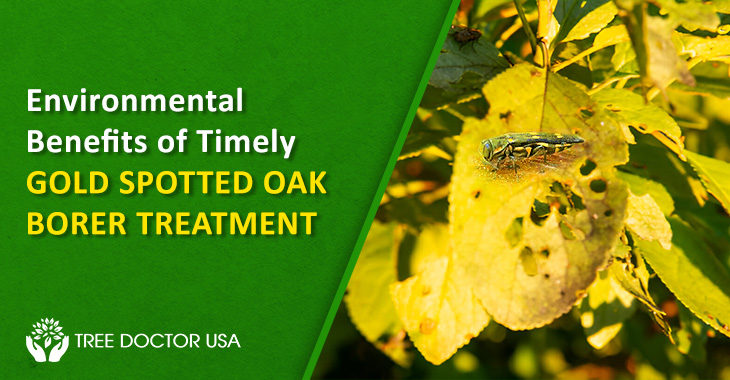
Gold Spotted Oak Borer Treatment is essential for protecting oak trees across California from severe infestation and tree death. The gold spotted oak borer (GSOB) has destroyed thousands of oaks throughout Southern California, making early identification and professional treatment critical for tree survival. If you notice bark staining, crown thinning, or D-shaped exit holes, immediate action is necessary.
In this guide, you’ll learn how to identify symptoms, understand the life cycle, and apply the best treatment methods to protect your oak trees.
What Is Gold Spotted Oak Borer?
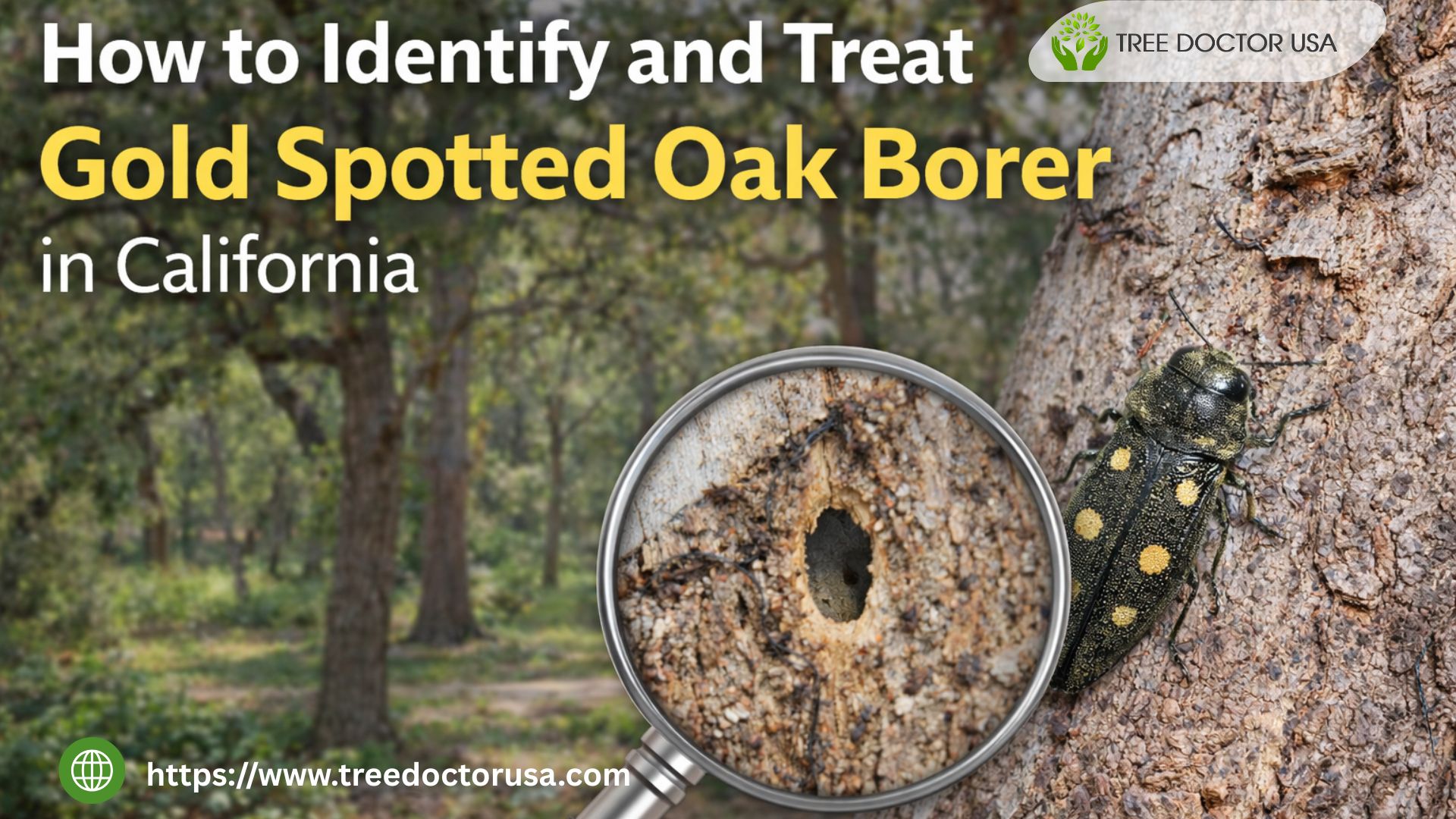
The gold spotted oak borer (Agrilus auroguttatus) is an invasive beetle that attacks oak trees. Originally native to Arizona, it has spread across multiple counties in California, including San Diego, Riverside, and Orange County.
This destructive pest targets:
- Coast live oak
- California black oak
- Canyon live oak
The larvae feed beneath the bark, disrupting the tree’s ability to transport water and nutrients. Over time, this leads to branch dieback and eventual tree death if Gold Spotted Oak Borer Treatment is not applied in time.
Signs of Gold Spotted Oak Borer Infestation
Early detection can save your tree. Watch for these common symptoms:
D-Shaped Exit Holes
Small, D-shaped holes in the bark indicate adult beetles emerging.
Bark Staining and Cracks
Dark or black staining on the bark surface is a common early warning sign.
Crown Thinning
Leaves may turn brown, thin out, or die from the top down.
Woodpecker Activity
Increased woodpecker damage can signal larvae feeding under the bark.
If you see multiple symptoms together, immediate Gold Spotted Oak Borer Treatment is recommended to prevent irreversible damage.
Why Gold Spotted Oak Borers Are Dangerous in California
California’s climate provides ideal conditions for GSOB reproduction. Without proper gold spotted oak borer control, infestations can spread rapidly between properties.
The beetle lifecycle includes:
- Egg stage (laid in bark crevices)
- Larval stage (most destructive phase)
- Pupal stage
- Adult beetle emergence
The larval feeding stage is when the most structural damage occurs. Trees may appear healthy initially but decline quickly once internal vascular systems are compromised.
Gold Spotted Oak Borer Treatment Options
Effective Gold Spotted Oak Borer Treatment depends on infestation severity.
Systemic Insecticide Injections
Tree injections deliver insecticide directly into the vascular system. This protects the tree internally and targets larvae feeding under the bark.
Preventative Treatment
Healthy nearby oaks should receive preventative gold spotted oak borer control treatments to stop spread.
Removing Severely Infested Trees
In advanced cases, tree removal may be necessary to protect surrounding trees.
Monitoring & Inspection
Annual professional inspections help detect early-stage infestations before visible symptoms worsen.
Professional arborists use scientifically approved treatment methods designed for California conditions.
When to Apply Treatment in California
Timing matters. The best time for Gold Spotted Oak Borer Treatment is before or during early infestation stages, typically:
- Late spring
- Early summer
Preventative treatments are most effective before adult beetles emerge.
If your area has confirmed GSOB activity, do not wait for visible damage. Proactive gold spotted oak borer control significantly improves survival rates.
Can Infected Oak Trees Be Saved?
Yes — but only if detected early.
Trees with:
- Less than 30–40% canopy loss
- Limited bark damage
- No major structural decay
Often respond well to professional Gold Spotted Oak Borer Treatment.
However, trees with extensive dieback or structural compromise may not recover. Early intervention is key.
How to Prevent Future Infestations
Prevention is just as important as treatment.
Avoid Moving Firewood
Transporting infested firewood spreads GSOB to new regions.
Maintain Tree Health
Healthy trees resist infestation better. Proper watering and soil care improve resilience.
Schedule Annual Inspections
Regular inspections ensure early detection and effective gold spotted oak borer control.
Prevention combined with timely treatment offers the strongest protection.
Cost of Gold Spotted Oak Borer Treatment in California
Treatment costs vary depending on:
- Tree size
- Infestation severity
- Number of trees
- Injection method used
While professional treatment requires investment, it is often far less expensive than tree removal and replacement.
Early Gold Spotted Oak Borer Treatment significantly reduces long-term costs.
Why Hire a Professional Arborist?
GSOB infestations require specialized knowledge. Licensed arborists:
- Correctly diagnose infestation stage
- Apply proper systemic injections
- Provide preventative strategies
- Monitor long-term tree health
DIY methods rarely reach larvae beneath the bark, making professional gold spotted oak borer control far more effective.
Conclusion
Gold spotted oak borer is one of the most destructive pests threatening California oak trees today. Early identification, professional treatment, and preventative strategies are critical for protecting your landscape.
If you suspect infestation, don’t delay. Gold Spotted Oak Borer Treatment applied at the right time can save your tree and prevent spread to surrounding oaks.
Call Us Today to schedule a professional inspection and protect your oak trees before damage becomes irreversible.
FAQs
Common signs include D-shaped exit holes, bark staining, crown thinning, branch dieback, and increased woodpecker activity. Early detection improves treatment success. If multiple symptoms appear, professional inspection is strongly recommended to confirm infestation and begin treatment.
Yes, oak trees can be saved if treated early. Trees with minimal canopy loss and limited bark damage respond best to systemic injections. Advanced infestations may require removal. Professional evaluation determines whether treatment or removal is appropriate.
Treatment is most effective in late spring or early summer before adult beetles emerge. Preventative treatments should be applied in high-risk areas even before symptoms appear. Timing significantly impacts success rates.
Costs depend on tree size, infestation level, and number of trees treated. While prices vary, treatment is typically more affordable than full tree removal and replacement. Early intervention reduces overall expenses.
GSOB spreads primarily through movement of infested firewood and natural beetle migration. Avoid transporting oak firewood from affected areas. Regular inspections and preventative treatment help stop infestation spread.
A certified arborist with over 10 years of hands-on experience, I specialize in tree health care, disease diagnosis, risk assessment, and sustainable pruning practices. Through Tree Doctor USA, I help homeowners and businesses protect urban canopies with science-based care, preventive maintenance, and practical guidance that keeps trees healthy, safe, and resilient.