

-
 by Certified Arborist
 - 9 Sep 2026
- Views: 67
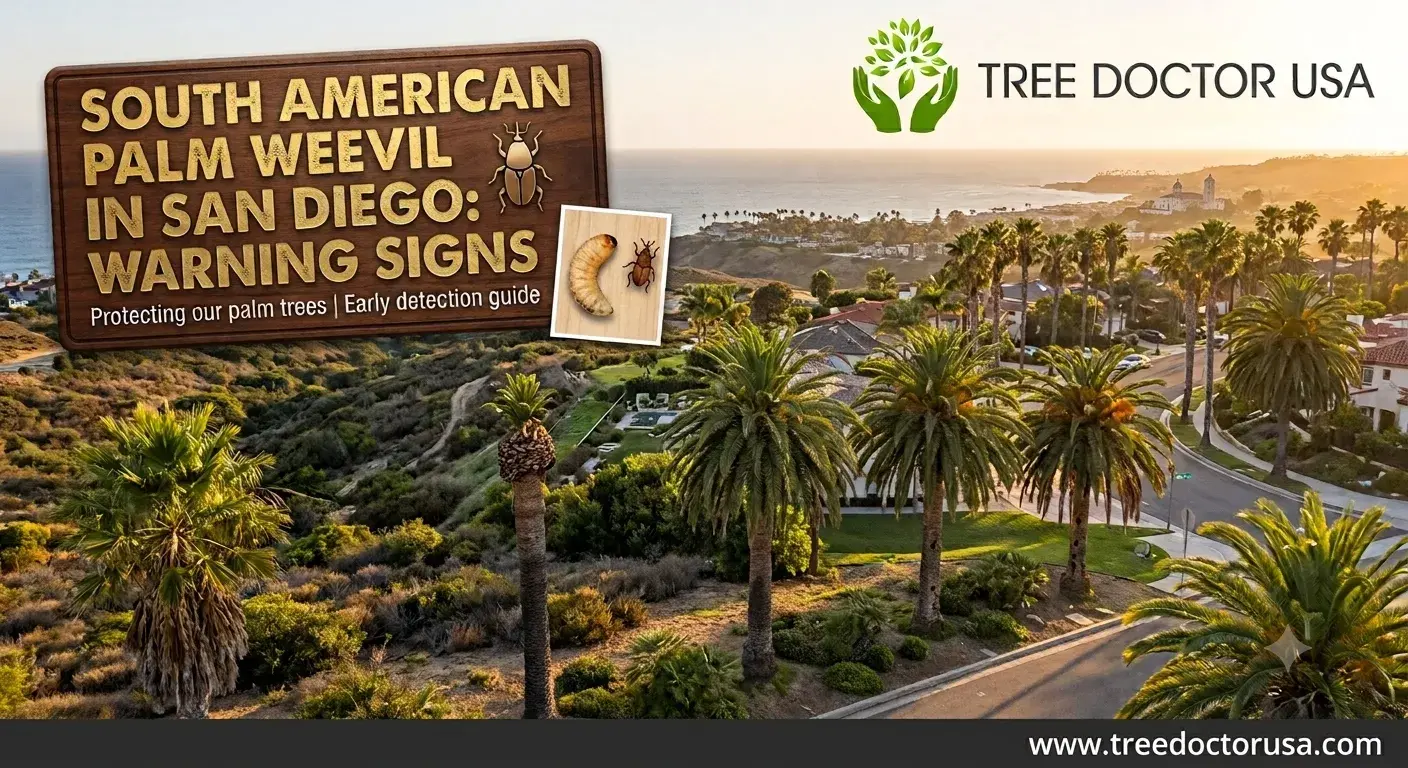
South American Palm Weevil in San Diego: Warning Signs
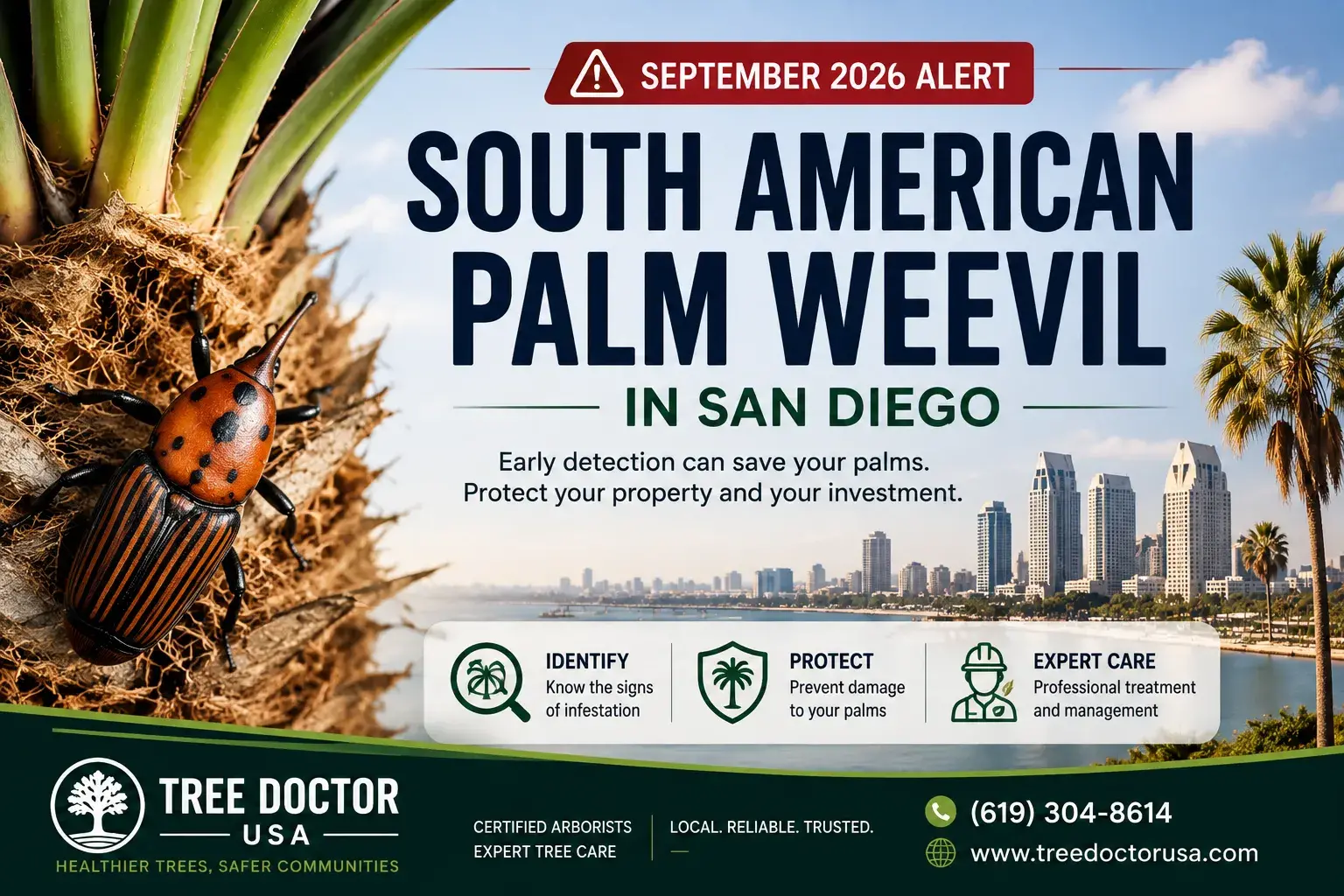
If you own palm trees in San Diego—especially Canary Island date palms—September 2026 is a critical month to inspect for the South American palm weevil (SAPW), a lethal invasive pest that has already killed an estimated 20,000 palms across Southern California.
This alert explains what SAPW is, how to spot early warning signs, why September is peak risk in San Diego County, and what treatment and prevention options can still save your palms if you act now.
Quick Answer
- South American palm weevil (Rhynchophorus palmarum) is a large, destructive beetle whose larvae bore into the palm’s crown and trunk, causing internal damage that is often fatal once symptoms appear.
- Peak activity in San Diego: March through November, with the highest infestation risk in August and September.
- What to do now: Inspect Canary Island date palms and other susceptible species for brown crown fronds, leaning trunks, holes, oozing sap, or adult beetles. If you see multiple signs, contact an ISA-certified arborist immediately for diagnosis and possible trunk injection treatment or removal.
Key Takeaways
- SAPW primarily targets Canary Island date palms but also attacks queen palms, Mexican fan palms, and other common San Diego landscape palms.
- Infestations are often hidden inside the trunk and crown until the palm begins to collapse, making early inspection essential.
- September is peak weevil activity in San Diego County; UC Riverside and local agencies are actively monitoring with pheromone traps in areas like Rancho Santa Fe.
- Preventive trunk injections can protect high-value palms; once the crown is destroyed, removal is usually the only safe option.
What Is the South American Palm Weevil?
The South American palm weevil (Rhynchophorus palmarum) is an invasive beetle that has spread through Southern California since around 2011, with San Diego County as a major hotspot.
How it damages palms:
- Adult weevils are attracted to wounds, pruning cuts, and stressed palms.
- Females lay eggs in the palm crown or trunk.
- Larvae hatch and tunnel into the growing point (heart) of the palm, feeding internally.
- This internal feeding destroys the palm’s structure and vascular system, often leading to sudden crown collapse and death within weeks to months.
Because the damage happens inside the trunk, homeowners often don’t notice a problem until the palm is in advanced decline.
Why September Is High-Risk for Palm Weevil in San Diego
San Diego’s climate and current infestation patterns make late summer and early fall the most dangerous time for palms.
- Peak activity window: Palm weevil activity runs from March through November, with August and September as the highest-risk months in San Diego County.
- Ongoing spread: The pest has been spreading from San Diego County since 2011, with researchers estimating around 20,000 palms killed across the region.
- Active monitoring: In 2026, UC Riverside has deployed 1,710 pheromone traps in Rancho Santa Fe alone as part of a $1 million state-funded monitoring program, underscoring how serious the threat remains.
- Local outbreaks: Cities like Dana Point are already implementing multi-phase treatment programs for hundreds of Canary Island date palms as weevils continue to move through coastal San Diego County.
For San Diego homeowners, September is not a “wait and see” month—it’s a critical inspection and prevention window.
5 Warning Signs of Palm Weevil Infestation
Catch these symptoms early—by the time they’re obvious, palm weevil treatment options may be limited.
1. Brown or Wilting Fronds in the Crown
The newest fronds at the top of the palm turn brown, wilt, or collapse while older fronds remain green. This is often the first visible sign of crown damage.
2. Leaning or Unstable Palm Trunk
Internal tunneling weakens the palm’s structural integrity, causing it to lean, wobble, or feel unstable—a serious safety hazard, especially near driveways, walkways, or structures.
3. Visible Holes or Tunnels in the Trunk
Look for pencil-sized holes or tunnels in the trunk or crown area, often with sawdust-like frass (insect waste) around the entry points.
4. Oozing Sap or Fermented Smell
Infested palms may ooze dark, fermented-smelling sap from the crown or trunk where larvae are feeding. A strong, rotten odor near the crown is a major red flag.
5. Adult Weevils on or Near the Palm
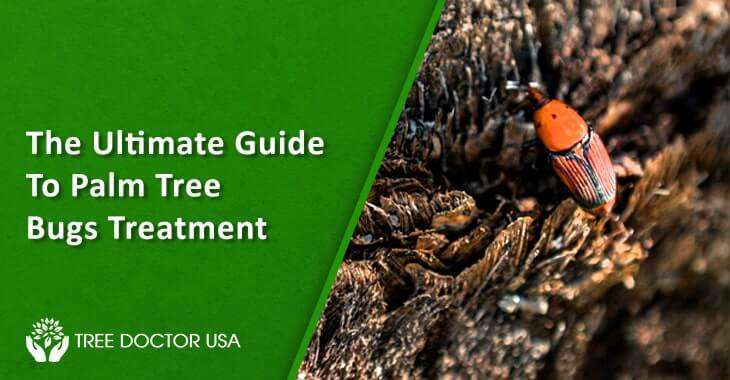
Adult South American palm weevils are large (1.5–2 inches), black or reddish-brown beetles with a distinctive snout. Seeing them on or around your palm is a strong indicator of risk.
Signs of South American palm weevil include brown or wilting crown fronds, a leaning trunk, pencil-sized holes with frass, oozing sap with a fermented odor, and large black or reddish-brown weevils on the palm.
Important: If you notice multiple symptoms—especially crown collapse or trunk leaning—contact a certified arborist immediately. Advanced infestations often require palm removal to prevent spread to nearby trees.
Adult Weevils on or Near the Palm
Adult South American palm weevils are large (1.5–2 inches), black or reddish-brown beetles with a distinctive snout. Seeing them on or around your palm is a strong indicator of risk.
Signs of South American palm weevil include brown or wilting crown fronds, a leaning trunk, pencil-sized holes with frass, oozing sap with a fermented odor, and large black or reddish-brown weevils on the palm.
Important: If you notice multiple symptoms—especially crown collapse or trunk leaning—contact a certified arborist immediately. Advanced infestations often require palm removal to help prevent spread to nearby trees.
For additional university-backed information on invasive beetle threats to California landscapes, see UC ANR’s guidance on invasive tree pests in California.
Which Palms Are Most at Risk in San Diego?
While SAPW can attack many palm species, some are far more vulnerable:
- Canary Island date palm (Phoenix canariensis)—primary and most heavily targeted host.
- Queen palm (Syagrus romanzoffiana)—increasingly affected as weevils move through landscapes.
- Mexican fan palm (Washingtonia robusta) and other fan palms—secondary hosts once primary hosts are depleted.
- Other Phoenix species (e.g., wild date palm)—also susceptible to heavy damage.
Mature, established palms are at higher risk than young trees, and palms with recent pruning wounds or drought stress are especially attractive to weevils.
Can a Palm Tree with Weevils Be Saved?
Yes—but only if caught early.
Early Detection = Treatment Possible
- Trunk injection treatments with systemic insecticides (e.g., emamectin benzoate, imidacloprid) can kill larvae and protect the palm if applied before severe crown damage.
- Preventive injections can protect nearby healthy palms from becoming infested.
- Regular monitoring (including pheromone traps in some areas) is essential to confirm treatment success and detect new activity.
Advanced Infestation = Removal Often Necessary
- Once the crown is destroyed or the palm is significantly leaning, recovery is unlikely.
- Removal and proper disposal (chipping, stump grinding) prevents weevils from spreading to neighboring palms.
- In municipal settings, cities like Dana Point are weighing the cost of ongoing treatment programs versus one-time removal and replacement of thousands of palms.
Why professional diagnosis is critical: Palm weevil symptoms can mimic other problems like Fusarium wilt, drought stress, or nutrient deficiencies. An ISA-certified arborist can accurately diagnose the issue and recommend the right course of action.
A palm with South American palm weevil can be saved only if treated early with trunk injections before the crown is destroyed; once the crown collapses or the trunk leans, removal is usually necessary.
Treatment and Prevention Options for San Diego Homeowners
Tree Doctor USA and other local providers offer several palm weevil management solutions for San Diego County.
1. Trunk Injection Treatments (Systemic Insecticides)
- Systemic insecticides (e.g., emamectin benzoate, imidacloprid) are injected directly into the trunk using specialized systems like Arborjet.
- The chemical moves through the palm’s vascular system, targeting larvae feeding inside the crown and trunk.
- Most effective when applied early in infestation or as a preventive measure on high-value palms.
- Requires licensed, certified applicators and proper timing (typically during active growing season).
2. Preventive Programs for High-Value Palms
For properties with multiple Canary Island date palms or other susceptible species:
- Scheduled inspections during peak months (August–October).
- Preventive trunk injections on healthy palms in high-risk areas.
- Pheromone trapping (often coordinated by cities or HOAs) to monitor weevil pressure.
3. Removal + Stump Grinding
For palms that are too far gone to save:
- Safe removal eliminates the weevil breeding ground.
- Stump grinding further reduces risk of larvae surviving in the base.
- Proper disposal (chipping, haul-away) helps prevent spread to nearby palms.
Cost of Palm Weevil Services in San Diego (2026)
Based on current San Diego market data and Tree Doctor USA pricing structures:
| Service Type | Price Range | Details |
|---|---|---|
| Basic Inspection | $75–$150 | Visual tree health assessment, verbal recommendations |
| Standard Consultation (1–3 palms) |
$100–$300 | Detailed evaluation of multiple palms |
| Written Arborist Report | $250–$550+ | Formal documentation for HOA, insurance, permits |
| Trunk Injection Treatment | $200–$400+ per palm | Systemic insecticide injection; varies by palm size and product |
| Palm Removal | $800–$3,500+ | Depends on height, access, debris removal, location |
| Stump Grinding | $150–$400 per stump | Optional add-on after removal |
💡 Pro Tip: Some inspection fees may be applied toward treatment costs if you proceed with Tree Doctor USA services—ask when booking.
For context, municipalities like Dana Point are budgeting hundreds of thousands of dollars annually to treat hundreds of Canary Island date palms, reflecting how costly large-scale infestations can become.
Prevention Tips for San Diego Palm Owners
Protect your palms before infestation occurs:
✅ Schedule Regular Inspections (Especially August–October)
- Peak weevil activity makes late summer and early fall the critical monitoring period.
- Early detection dramatically improves treatment success rates.
- Professional inspections catch problems homeowners might miss until it’s too late.
✅ Avoid Wounding Palms
- Weevils are strongly attracted to fresh cuts, cracks, and injuries.
- Schedule pruning during low-activity months (winter) when possible.
- Use proper pruning techniques to minimize stress and open wounds.
✅ Maintain Palm Health
- Healthy palms resist pests better than stressed trees.
- Provide proper irrigation, fertilization, and soil care, especially during hot, dry periods.
- Avoid drought stress, which makes palms more attractive to weevils.
✅ Report Suspicious Activity
- Contact the San Diego County Agricultural Department or CDFA if you spot adult weevils or suspect infestation.
- Early reporting helps track and contain outbreaks at the neighborhood level.
When to Call a San Diego Arborist for Palm Weevil
Contact an ISA-certified arborist in San Diego if you notice:
- Brown or collapsing fronds in the crown while lower fronds remain green.
- A palm that is leaning, wobbling, or feels unstable.
- Pencil-sized holes, tunnels, or sawdust-like frass on the trunk or crown.
- Oozing sap or a strong fermented/rotten smell near the crown.
- Large black or reddish-brown weevils on or around the palm.
Early professional assessment can:
- Confirm whether SAPW is the cause versus other issues (fusarium wilt, drought, nutrients).
- Identify which palms can realistically be saved with injections.
- Provide a clear treatment or removal plan with cost estimates.
For San Diego homeowners, investing in a palm health inspection now is often far cheaper than emergency removal after a palm collapses.
Conclusion
The South American palm weevil is one of the most serious threats to mature palms in San Diego County, with an estimated 20,000 palms already killed across Southern California and ongoing spread into coastal communities like Dana Point.
September 2026 is a critical month: weevil activity is at its peak, and early signs of infestation are still treatable if caught before the crown collapses.
If you own Canary Island date palms or other susceptible species in San Diego, Chula Vista, Rancho Santa Fe, Orange County, or Riverside County, don’t wait for obvious damage. Contact Tree Doctor USA to schedule an ISA-certified palm health inspection, confirm your tree’s risk, discuss preventive trunk injections, and protect your landscape before the infestation spreads.
FAQs
Canary Island date palms are the primary and most heavily targeted host. Queen palms, Mexican fan palms, and other Phoenix species are also at risk, especially as the pest spreads through neighborhoods.
Yes, if caught early. Trunk injection treatments with systemic insecticides can kill larvae and save the palm if the crown is not yet destroyed. Once the crown collapses or the trunk is significantly leaning, recovery is unlikely and removal is recommended.
Expect roughly $200–$400+ per palm for trunk injection treatments, depending on size and product. Inspections range from $75–$300, and removal of heavily infested palms can cost $800–$3,500+ based on height and access.
Palm weevil often shows brown crown fronds, a leaning trunk, pencil-sized holes with frass, oozing sap, and a fermented odor, whereas issues like drought stress or nutrient deficiency typically don’t produce holes, frass, or strong odors. A certified arborist inspection is the most reliable way to confirm.
The highest-risk window is August through October, with September as a peak month. Inspections and preventive treatments during this period offer the best chance of early detection and successful management.
A certified arborist with over 10 years of hands-on experience, I specialize in tree health care, disease diagnosis, risk assessment, and sustainable pruning practices. Through Tree Doctor USA, I help homeowners and businesses protect urban canopies with science-based care, preventive maintenance, and practical guidance that keeps trees healthy, safe, and resilient.