

-
 by Certified Arborist
 - 6 Mar 2026
- Views: 1517
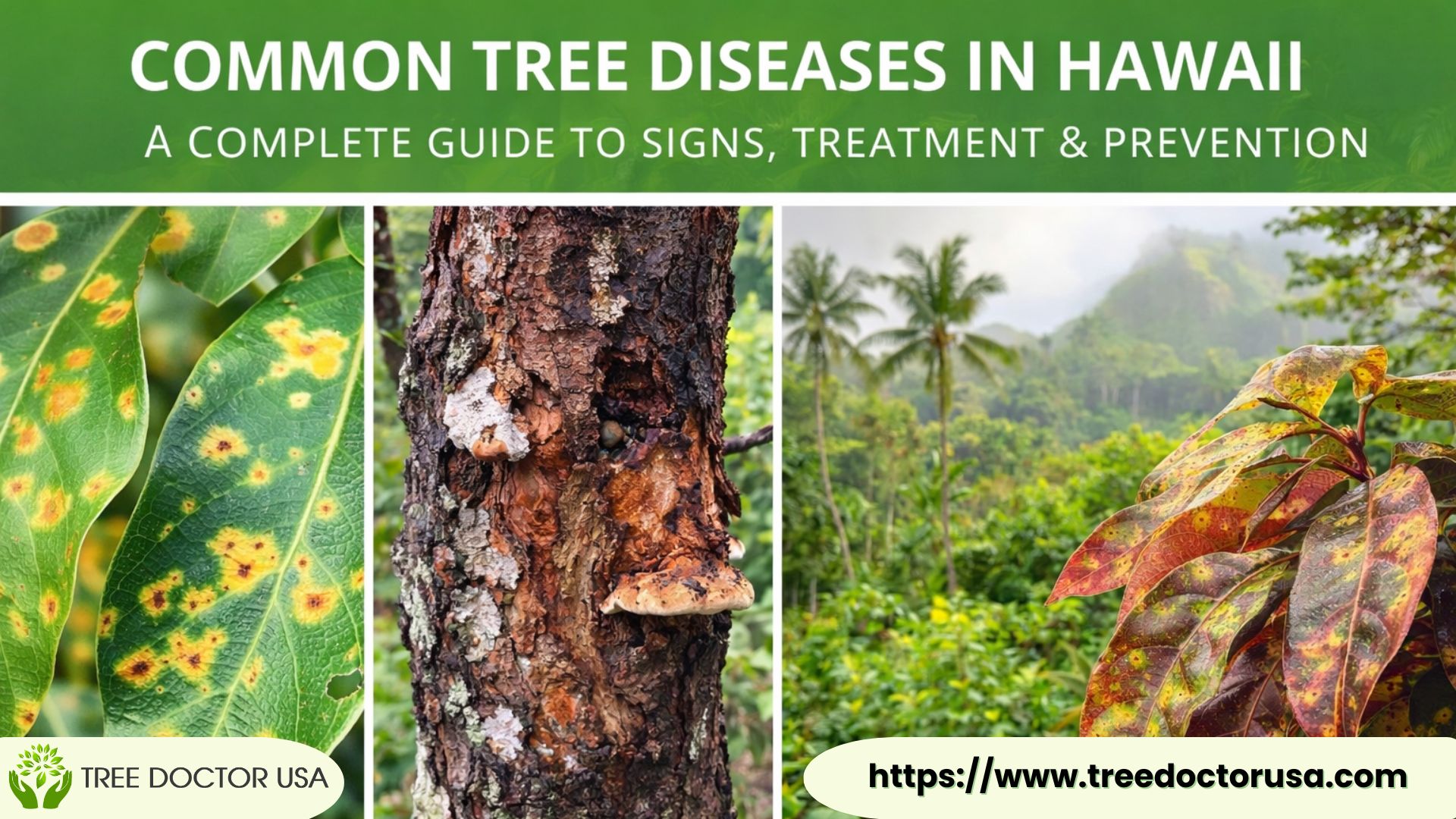
Common Tree Diseases in Hawaii: A Complete Guide to Signs, Treatment & Prevention
Trees are the silent backbone of Hawaii’s breathtaking landscape. From the misty upland forests draped in native ʻōhiʻa to the broad, shading canopies lining neighborhood streets, trees define the character of the islands and support entire ecosystems. Yet in the rush of daily life, tree care is one of the first things homeowners and land managers overlook — until something goes wrong. As a trusted team of tree care professionals, we are frequently asked about common tree diseases in Hawaii, which ones to worry about most, and how to keep beloved trees alive and thriving. This guide covers the most prevalent diseases affecting Hawaii’s trees, what to look for, how to respond, and the preventive habits that make the biggest long-term difference.
#1 Rapid ʻŌhiʻa Death (ROD)
Among all common tree diseases in Hawaii, Rapid ʻŌhiʻa Death is perhaps the most alarming. First confirmed in 2014, this disease has since killed hundreds of thousands of ʻōhiʻa trees across the Big Island and has been detected on other islands as well. The ʻōhiʻa lehua tree is one of Hawaii’s most ecologically significant native species, providing habitat for native birds and anchoring the structure of native forests. Its rapid decline sends shockwaves through the entire ecosystem.
ROD is caused by two related fungal species in the Ceratocystis genus. The fungus invades the tree’s vascular system, blocking the flow of water and nutrients. Hawaii’s warm, wet climate accelerates its spread, and the spores can be transported on tools, boots, vehicles, and contaminated soil.
Signs of Rapid ʻŌhiʻa Death: The most striking symptom is how fast it moves. Within days or weeks, an entire crown can shift from healthy green to wilted yellow to dead brown. Unlike typical drought stress, which moves gradually, ROD collapses a tree with startling speed. Internally, the sapwood shows dark brown to black streaking when cut — a telltale diagnostic sign. Whole branches die back simultaneously, and leaf drop follows quickly.
How to Treat Rapid ʻŌhiʻa Death: There is currently no cure for ROD once a tree is infected. Management focuses entirely on containment and prevention. Infected trees should be removed and destroyed — either chipped on-site using a fine-chip setting or burned. Any tools, footwear, or equipment used near infected areas must be disinfected with 70% isopropyl alcohol before moving to new locations. If you plan to replant, seek out ʻōhiʻa seedlings from certified nurseries working on resistant varieties. A professional tree health assessment in Hawaii is critical before any replanting efforts begin in affected areas.
#2 Koa Wilt
Koa is one of Hawaii’s most iconic trees — a towering native hardwood prized for its beauty, cultural significance, and role in the forest canopy. Unfortunately, it is also vulnerable to koa wilt, one of the more widespread common tree diseases in Hawaii that has been documented since the 1980s. Koa wilt is caused by the soil-borne fungus Fusarium oxysporum f. sp. koae, which colonizes the tree’s vascular system and disrupts water uptake from roots to canopy. The disease is most prevalent at lower elevations and has been reported across Hawaii, Maui, Oahu, and Kauai.
Signs of Koa Wilt: Koa wilt typically begins with a single branch or section of the canopy showing yellowing and wilting leaves. Unlike ROD, koa wilt tends to progress more slowly, spreading from branch to branch over weeks or months. The crown gradually thins, leaves turn brown, and without intervention, the tree eventually dies. Cutting into the bark of an affected branch will reveal dark streaking within the vascular tissue — a diagnostic hallmark of vascular fusarium wilt diseases.
How to Treat Koa Wilt: No complete cure exists for koa wilt, but early action can slow the disease’s progression and, in some cases, save parts of the tree. Pruning out visibly infected branches and immediately burning them is the first step. Avoid moving soil, mulch, or plant material from infected sites, as Fusarium spores persist in soil for years. When establishing new koa plantings, source seedlings from reputable nurseries that work with disease-resistant genetics. A thorough tree health assessment in Hawaii that evaluates soil conditions and drainage is valuable before any new koa is planted.
#3 Phytophthora Root Rot
Phytophthora root rot is one of the most common tree diseases in Hawaii, affecting backyard trees and agricultural plantings alike. Species like ulu (breadfruit), avocado, macadamia, and many ornamentals are vulnerable. This water mold — technically not a true fungus — thrives in saturated soils and attacks tree roots before most homeowners notice anything is wrong. By the time symptoms appear above ground, root damage may already be severe.
Signs of Phytophthora Root Rot: Above-ground symptoms are often mistaken for drought stress. Leaves turn yellow, red, or purple and wilt even when the soil is moist. The base of the trunk may develop darkened, water-soaked lesions. When roots are dug up, they appear rotted, dark brown or black, and may have an unpleasant odor. Trees decline branch by branch over months or years, and young trees may die more quickly than established ones.
How to Treat Phytophthora Root Rot: The most effective long-term strategy is improving drainage and reducing excess soil moisture. Avoid overwatering and fix any areas where water pools around tree bases. If the disease is caught early, phosphite-based fungicides applied as soil drenches or injected into the trunk can slow progression significantly. Heavily infected trees with severe root loss should be removed to prevent the pathogen from spreading to adjacent plants. A professional tree health assessment in Hawaii will help determine whether treatment is viable or tree removal is the more responsible course.
#4 Ohia Rust
While not as lethal as ROD, ohia rust is one of the more frequently observed common tree diseases in Hawaii, particularly on Oahu. Caused by the fungal pathogen Puccinia psidii (also known as guava rust or myrtle rust), it primarily affects young growth on ʻōhiʻa and other members of the Myrtaceae family. Wet, warm conditions during Hawaii’s rainy seasons accelerate spore production and spread.
Signs of Ohia Rust: Small, bright yellow powdery pustules appear on young leaves, stems, and flower buds. These spots enlarge over time, the surrounding tissue dies, and heavily infected leaves drop prematurely. Repeated defoliation weakens trees, and young shoots or seedlings may be killed outright during severe outbreaks.
How to Treat Ohia Rust: Remove and bag infected leaves and shoots immediately to reduce the spore load. Avoid overhead irrigation that keeps foliage wet for extended periods. When outbreaks are severe, copper-based or systemic fungicides can be applied, though they work best as preventives rather than cures. Monitoring tree health in Hawaii during and after rainy seasons is the most effective way to catch ohia rust early and prevent it from establishing a serious foothold.
#5 Anthracnose
Anthracnose is a broad term for a group of fungal diseases caused by several species in the Colletotrichum and Gloeosporium genera. It ranks among the most commonly reported tree diseases in Hawaii, particularly in humid valleys and shaded areas where air circulation is poor. While anthracnose rarely kills mature trees outright, repeated infections weaken them, making them susceptible to secondary pests and pathogens.
Signs of Anthracnose: Dark brown or black irregular spots appear on leaves, often concentrated along the midrib and leaf veins. Infected leaves curl, turn yellow, and drop ahead of schedule. In severe cases, twigs develop sunken cankers, and die-back progresses from branch tips inward. Wet spring weather tends to trigger the worst outbreaks.
How to Treat Anthracnose: Good sanitation is the foundation of anthracnose management. Rake up and dispose of fallen leaves, which harbor fungal spores through the off-season. Prune out infected twigs and branches during dry weather, and disinfect pruning tools between cuts. Fungicides containing propiconazole or copper can be applied at bud break to protect new growth. Improving air circulation through strategic pruning is one of the most effective long-term measures for tree health in Hawaii properties where anthracnose recurs.
#6 Powdery Mildew
Powdery mildew stands out visually among common tree diseases in Hawaii because of its distinctive appearance — a white or gray powdery coating on leaf surfaces. It affects a wide range of trees in shaded, humid conditions and is particularly problematic on young or newly transplanted specimens. Unlike many other fungal diseases, powdery mildew does not require wet foliage to spread; it actually thrives in humid but dry-surface conditions.
Signs of Powdery Mildew: The hallmark symptom is the white or grayish powdery growth on leaves, stems, and buds. Infected leaves may curl, turn yellow, and drop early. New growth appears stunted and distorted, and heavily infected shoots fail to develop normally.
How to Treat Powdery Mildew: Pruning to open up the canopy for better sunlight penetration and airflow is the most sustainable management approach. Avoid applying water directly to foliage, especially in the evening. For active infections, sulfur-based sprays are effective when applied early, and systemic fungicides can be used for more persistent problems. Regular tree health assessment during dry periods — when powdery mildew is counterintuitively most active — helps catch problems before they spread widely.
Preventive Measures to Protect Your Trees From Common Diseases
The most effective and cost-efficient way to manage common tree diseases in Hawaii is to prevent them from taking hold in the first place. Strong, well-maintained trees are significantly more resistant to infection, and smart cultural practices reduce the conditions that pathogens need to thrive.
Water wisely. Deep, infrequent watering at the tree’s root zone keeps moisture out of the canopy and promotes deep rooting. Wet foliage is an open invitation for fungal spores to germinate. Drip irrigation and soaker hoses are ideal for Hawaii properties.
Prune with purpose. Open canopies allow air to circulate and sunlight to penetrate, drying foliage faster after rain. Always prune during dry weather to minimize the risk of fungal entry through fresh wounds, and disinfect tools between trees.
Feed the soil, not just the tree. Conduct a soil test before fertilizing. Over-fertilizing with nitrogen produces lush, tender growth that is highly susceptible to infection. Slow-release fertilizers support steady, resilient growth. Healthy soil biology also contributes to suppression of some soil-borne pathogens.
Practice strict biosecurity. This is especially critical for ROD and koa wilt. Clean boots, tools, vehicles, and equipment with 70% isopropyl alcohol before moving between planting sites. Never move soil, mulch, or plant material from areas where disease has been confirmed.
Mulch strategically. A 3–4 inch layer of organic mulch around the base of trees conserves soil moisture, moderates temperature, and suppresses weeds. Keep mulch several inches away from the trunk to prevent rot and discourage fungal colonization at the bark.
Protect tree roots from disturbance. Fencing to exclude feral pigs and goats is increasingly recognized as an important tool in Hawaii’s forest disease management. Root damage from these animals creates entry points for pathogens and disrupts the soil ecosystem that supports tree health.
Space new plantings well. Crowded trees compete for light, air, and nutrients — and share pathogens more readily. Choose species appropriate to your site’s elevation, rainfall, and soil type.
Schedule regular professional assessments. Routine tree health assessments in Hawaii from certified arborists are the single most powerful tool homeowners and land managers have for staying ahead of disease. Professionals can identify early-stage infections that are invisible to untrained eyes, recommend targeted treatments, and guide planting decisions.
When to Call a Tree Care Professional
If you observe any of the symptoms described in this guide — sudden crown browning, wilting despite adequate water, powdery leaf coatings, dark streaking in wood, or foul-smelling roots — do not wait to seek help. Many common tree diseases in Hawaii move quickly, and early intervention dramatically improves outcomes. Calling a professional for a comprehensive tree health assessment in Hawaii is the responsible step for any tree showing signs of distress.
Tree care professionals can also help with ongoing monitoring plans, treatment scheduling, and making informed decisions about removal when trees are beyond saving. Protecting the trees on your property is not just a matter of aesthetics — it contributes to the broader health of Hawaii’s forests, watersheds, and wildlife habitats.
Strong, healthy trees mean healthy islands. With the right knowledge, habits, and expert support, every property owner in Hawaii can play a meaningful role in protecting the natural legacy that makes these islands so extraordinary.
FAQs
Common tree diseases in Hawaii include Rapid ʻŌhiʻa Death, Koa Wilt, Phytophthora Root Rot, Ohia Rust, Anthracnose, and Powdery Mildew. A Tree Health Assessment in Hawaii helps detect these problems early.
Signs include yellow leaves, branch dieback, leaf spots, powdery coatings, or rotting roots. A professional Tree Health Assessment in Hawaii can confirm the cause.
There is no cure for Rapid ʻŌhiʻa Death. Removing infected trees and following sanitation practices helps prevent spread. Professional Tree Disease Treatment in Hawaii can protect nearby trees.
Root rot is usually caused by Phytophthora in overly wet or poorly drained soil. Early diagnosis through a Tree Health Assessment in Hawaii can help save affected trees.
Arborists treat fungal infections with pruning, sanitation, and targeted fungicides. Professional Tree Disease Treatment in Hawaii ensures the correct treatment plan.
Proper watering, pruning, good drainage, and tool sanitation help prevent disease. Regular Tree Health Assessments in Hawaii also help catch problems early.
Yes. Many diseases spread through soil, water, spores, or contaminated tools. Professional Tree Disease Treatment in Hawaii helps control outbreaks.
Call a professional if you see sudden leaf drop, canopy dieback, or unusual spots. A Tree Health Assessment in Hawaii can identify the issue quickly.
A certified arborist with over 10 years of hands-on experience, I specialize in tree health care, disease diagnosis, risk assessment, and sustainable pruning practices. Through Tree Doctor USA, I help homeowners and businesses protect urban canopies with science-based care, preventive maintenance, and practical guidance that keeps trees healthy, safe, and resilient.