

-
 by Certified Arborist
 - 25 Feb 2026
- Views: 13
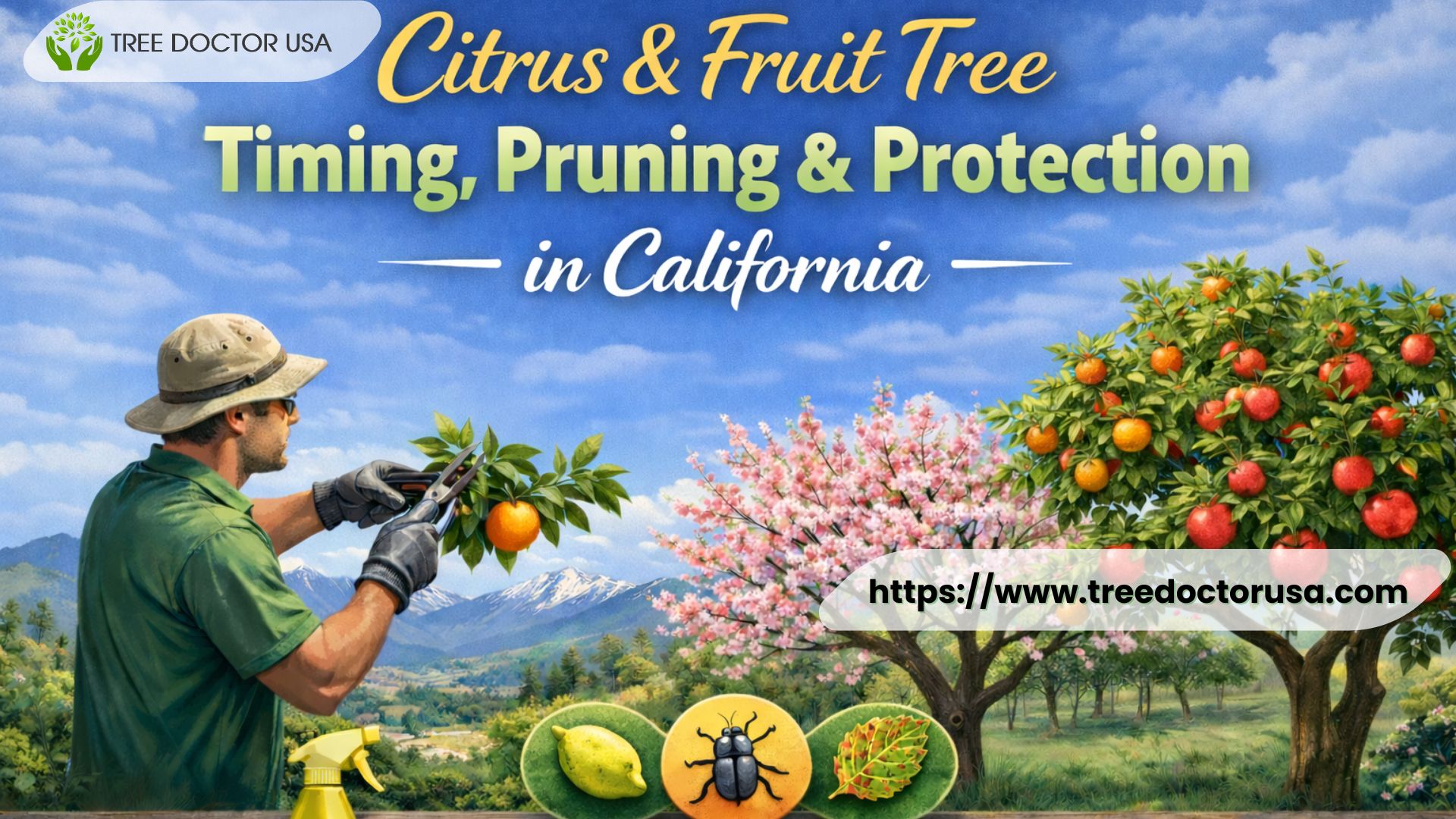
Citrus & Fruit Tree Spring Prep in California: Timing, Pruning, and Protection
Introduction
Spring is one of the most important seasons for citrus and fruit tree care in California. As temperatures begin to warm and trees shift from dormancy into active growth, proper preparation becomes essential for healthy development and strong fruit production.
Whether you own lemon trees in San Diego, oranges in Orange County, or peaches in Northern California, investing in professional tree pruning services during the early growing season can significantly improve tree health, structure, and harvest quality.
Why Spring Preparation Matters in California
California’s climate allows citrus and fruit trees to thrive, but it also creates ideal conditions for pests, fungal diseases, and structural stress if trees are not maintained properly.
As trees transition into active growth:
- Buds begin to swell
- New shoots develop
- Sap flow increases
- Insects become more active
- Soil moisture levels fluctuate
Preparing your trees during this period helps prevent long-term damage and ensures consistent fruit production throughout the growing season.
Understanding Citrus vs. Deciduous Fruit Trees
Different fruit trees require different pruning approaches.
Citrus Trees (Evergreen)
Examples include orange, lemon, lime, and grapefruit trees. Because citrus trees remain evergreen, they do not fully enter dormancy. They require:
- Light structural shaping
- Removal of dead or diseased wood
- Thinning to improve airflow
- Protection from excessive sun exposure
Over-pruning citrus trees can reduce fruit yield and expose interior branches to sunburn.
Deciduous Fruit Trees
Examples include peach, plum, apple, and pear trees. These trees lose their leaves during cooler seasons and benefit from structural pruning before heavy new growth begins.
Key goals include:
- Opening the canopy for sunlight
- Removing crowded or crossing branches
- Encouraging productive fruiting wood
- Strengthening the overall structure
Professional tree pruning services understand these species differences and apply the proper technique for each type of tree.
How Proper Pruning Improves Fruit Production
Strategic pruning does more than improve appearance. It directly affects the quantity and quality of fruit.
1. Increased Sunlight Exposure
Fruit develops better color and sweetness when exposed to adequate sunlight. Thinning dense canopies allows light to reach interior branches.
2. Improved Air Circulation
Better airflow reduces moisture buildup, which lowers the risk of fungal diseases.
3. Stronger Branch Support
Removing weak or poorly angled limbs prevents breakage when trees are loaded with fruit.
4. Reduced Pest Habitat
Dense growth creates shelter for insects. Proper pruning makes it harder for infestations to spread.
5. Encouraged Healthy Growth
Correct cuts stimulate balanced, productive growth instead of excessive leafy shoots.
Without professional tree pruning services, improper cuts may stress the tree and reduce long-term productivity.
Common Spring Issues for California Fruit Trees
During early growth stages, homeowners often notice warning signs that require attention.
Yellowing Leaves
This may indicate nutrient deficiencies, poor drainage, or root stress.
Dead or Brittle Branches
Previous seasonal stress or undetected disease may have damaged wood.
Uneven Canopy Growth
Poor structure can lead to imbalanced fruit load and future breakage.
Early Pest Activity
Aphids, scale insects, spider mites, and citrus leafiness often target new growth.
A professional inspection during pruning allows early identification and treatment of these issues.
Pest Protection During the Growing Transition
California’s mild climate allows pests to become active quickly as temperatures rise.
Common threats include:
- Aphids
- Scale insects
- Citrus leafiness
- Spider mites
- Trips
Combining pest monitoring with tree pruning services ensures problems are addressed before they spread. Early intervention helps protect fruit quality and prevent costly damage later in the season.
Preventative care may include:
- Horticultural oil applications
- Targeted treatments
- Soil improvement
- Routine monitoring
Watering & Soil Care Best Practices
After periods of rainfall, soil moisture levels may remain high. Overwatering during this time is one of the most common mistakes homeowners make.
Best practices include:
- Checking soil moisture before irrigating
- Ensuring proper drainage
- Applying mulch around the root zone (without touching the trunk)
- Beginning balanced fertilization once active growth is visible
Healthy soil conditions support strong root systems, which directly influence fruit size and overall tree health.
Signs You Should Schedule Professional Tree Pruning Services
While light trimming may seem simple, incorrect pruning can cause permanent structural damage. Consider professional help if you notice:
- Large, overgrown canopies
- Branches crossing or rubbing
- Storm-damaged limbs
- Declining fruit production
- Weak branch attachments
- Limbs extending over structures
Arborists specializing have the training and tools to prune safely and effectively while preserving long-term tree health.
Regional Considerations Across California
Tree growth patterns vary depending on location.
Coastal Areas
Milder temperatures and higher humidity can increase fungal risks and early pest activity.
Inland Regions
Hotter, drier climates require careful canopy management to prevent sunburn and water stress.
Northern Areas
Cooler conditions may slightly delay growth cycles, affecting pruning timing.
Local knowledge matters. Professional tree pruning services understand how regional climate conditions impact citrus and fruit trees.
Common Pruning Mistakes to Avoid
❌ Removing too much canopy at once
❌ Topping citrus trees
❌ Cutting branches flush with the trunk
❌ Using dull or unclean tools
❌ Ignoring tree structure
These mistakes can lead to poor fruiting, disease entry, and structural instability.
Long-Term Benefits of Professional Tree Pruning Services
Hiring experienced arborists provides advantages beyond immediate appearance:
✔ Increased fruit yield
✔ Better fruit quality
✔ Reduced disease risk
✔ Improved tree structure
✔ Enhanced property value
✔ Longer tree lifespan
Proper pruning is an investment in your landscape’s long-term health and productivity.
Spring Tree Care Checklist
Use this checklist to keep your citrus and fruit trees thriving:
- Inspect for dead or diseased wood
- Improve airflow through light thinning
- Monitor for pest activity
- Adjust watering schedule
- Apply balanced fertilizer
- Refresh mulch layer Schedule professional tree pruning services
Final Thoughts
Preparing citrus and fruit trees during the early growing season is essential for maximizing fruit production and maintaining long-term tree health in California’s unique climate.
With proper timing, expert pruning techniques, and proactive pest management, your trees can produce healthier growth and higher-quality fruit year after year.
Professional tree pruning services ensure your trees receive the care they need to thrive, protect your investment, and enhance your landscape’s beauty.
FAQs
The best time to prune citrus and fruit trees is before heavy new growth begins. Proper timing helps improve airflow, sunlight penetration, and overall fruit production. Professional tree pruning services ensure cuts are made safely without stressing the tree.
Most citrus trees need light pruning once per year. However, damaged, diseased, or overcrowded branches should be removed as needed to maintain healthy growth and prevent pest issues.
Without pruning, fruit trees can become overcrowded, produce smaller fruit, and become more vulnerable to pests and diseases. Regular tree pruning services improve structure, increase yield, and extend tree lifespan.
Yes. Removing dead, infected, or crossing branches improves air circulation and reduces moisture buildup — two major causes of fungal diseases. Clean, professional pruning cuts also prevent long-term damage.
Yes. Incorrect pruning can weaken citrus and fruit trees, reduce fruit production, and cause permanent structural damage. Certified arborists use proper techniques and tools to protect tree health and maximize results.
Pruning allows more sunlight to reach the canopy, which improves fruit size, color, and sweetness. It also helps the tree focus energy on strong, productive branches.
A certified arborist with over 10 years of hands-on experience, I specialize in tree health care, disease diagnosis, risk assessment, and sustainable pruning practices. Through Tree Doctor USA, I help homeowners and businesses protect urban canopies with science-based care, preventive maintenance, and practical guidance that keeps trees healthy, safe, and resilient.