

-
 by Certified Arborist
 - 1 Apr 2026
- Views: 12
What To Expect From A 24-Hour Emergency Tree Service
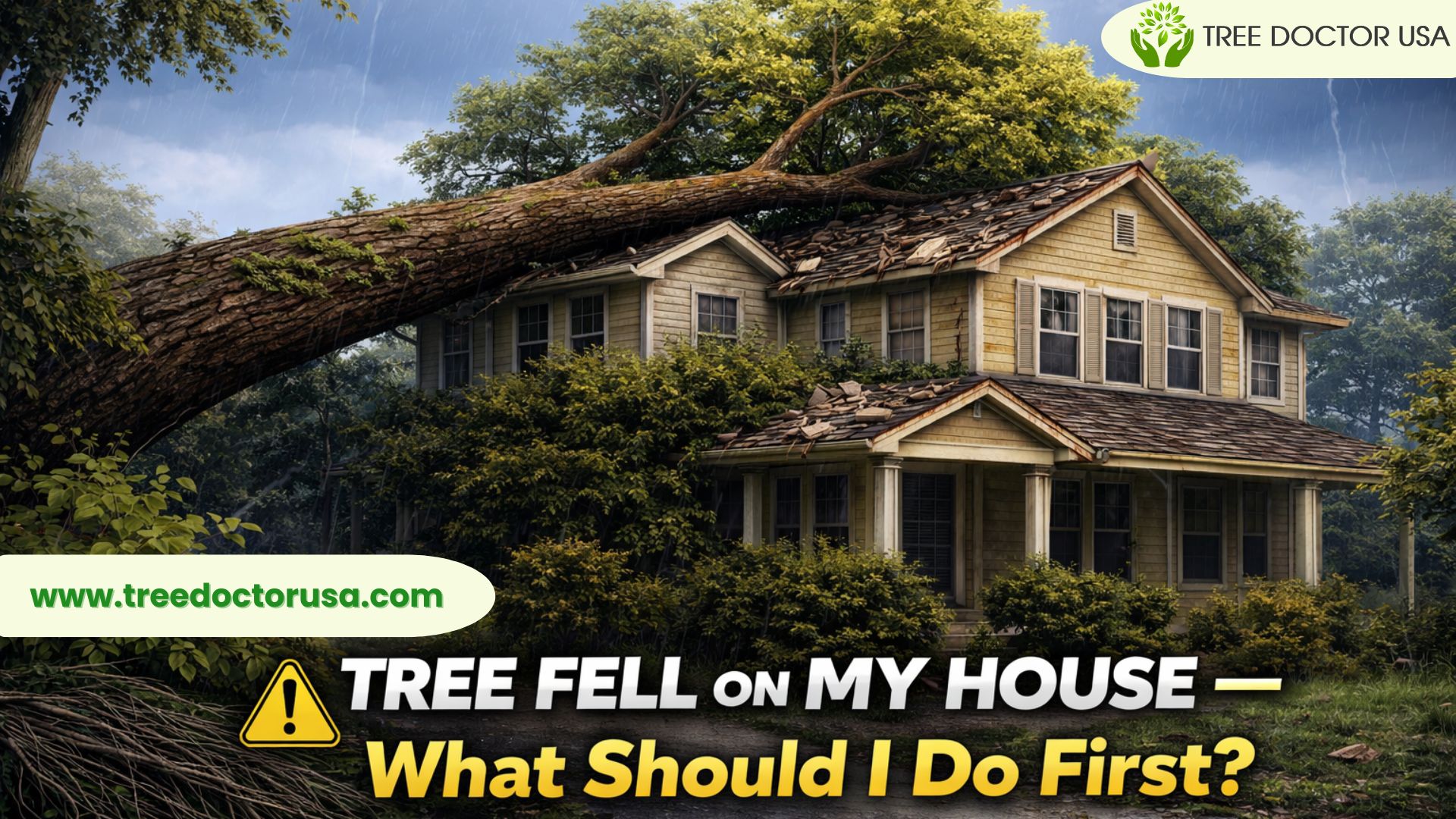
A fallen tree at 2 a.m. isn’t something you put on next week’s to-do list. Whether a storm snapped a branch onto your roof, you’ve got a tree leaning toward your house, or there’s a downed trunk blocking your driveway — you need a real 24-hour emergency tree service right now, not a callback on Tuesday.
At Tree Doctor USA, we’ve been handling emergency tree services across San Diego, Orange County, Riverside County, and Los Angeles for years. This guide covers everything you actually need to know when a tree turns into a threat.
6 Warning Signs You Need Emergency Tree Service Right Away
Not every droopy branch means you need to make a midnight call. But some situations genuinely cannot wait. Here are the red flags that tell you this is an emergency tree situation, not something to schedule for next week.
Tree Leaning Toward Your House
A sudden lean — and especially if the soil around the base is cracking or heaving upward — means root failure is probably already happening. Gravity and the next gust of wind will for sure do the rest of the work. A tree leaning toward your house is one of those things that looks like it might be fine until it isn’t.
Fallen Tree Blocking Your Driveway
Well, this isn’t just inconvenient — it’s a real safety problem. A fallen tree blocking your driveway can trap your family inside and keep emergency vehicles from getting through. That’s not a situation where you can leave until morning.
Cracked or Split Trunk
Deep vertical cracks in the trunk, especially ones that showed up after a storm or a lightning strike, are a clear sign the tree’s structure is seriously compromised. It can come apart at any time — don’t wait and see.
Hanging or ‘Widow-Maker’ Branches
You’ve probably seen large limbs that have snapped but got caught up in the canopy above. Those can drop with just a light breeze — no warning at all. Getting those down fast is exactly the kind of thing our emergency tree trimming service handles.
Uprooted or Partially Lifted Roots
If you can actually see the root plate lifting out of the ground, the tree has lost its anchor. This happens more than people expect in San Diego, Orange County, and Riverside County after heavy winter rain when the soil gets completely saturated. An uprooted tree repair isn’t something to delay.
Tree Touching Power Lines
Never go near this on your own. A tree or branch making contact with electrical lines is both an electrocution risk and a fire hazard. Call your utility company first, then call us for emergency tree care.
So, just keep an eye on your trees. If you’re hearing loud cracking sounds or you’ve noticed a sudden change in the angle of a tree, don’t leave it. It is always much better to call a trusted 24-hour emergency tree service near you as soon as possible — these situations almost never get better on their own.
What to Do Before Our Crew Arrives: 5 Safety Steps
Well, after calling our crew, you don’t have to sit beside that tree or attempt to cut it yourself. This is not at all a safe thing to do at that moment. So, till our team reaches your location, here are a few things that you can do.
01 Stay Away From The Damaged Tree
Keep everyone — kids, pets, everyone — at least two full tree-lengths back from the affected area. Damaged trees can shift without any warning at all.
02 Check For Power Line Contact
If there’s any chance the tree is touching electrical lines, treat them as live and dangerous. Don’t go near them, don’t touch anything connected to the tree. Call your utility company immediately, then call Tree Doctor USA at (619) 650-6348.
03 Move Vehicles And Outdoor Items If It’s Safe
If you can get a car or patio furniture out of the tree’s potential fall zone without going anywhere near the tree itself, go ahead and do that. But if moving anything means passing close to the tree, just leave it.
04 Document The Damage From A Safe Distance
Take photos from wherever you can safely stand. Capture the tree’s position, any structural damage it’s caused, and the area around it. This documentation will make your insurance claim move a lot faster.
05 Call Your Trusted Emergency Tree Service Right Away
Our team is on standby 24 hours a day, seven days a week. When you call, tell us your address, describe what the tree is doing, and let us know if power lines are involved — that way we bring exactly the right equipment.
What Happens When Tree Doctor USA Arrives At Your Location
So, you’ve called our 24-hour emergency tree service — now what? Here’s a straightforward look at what actually happens from the moment we pick up your call to the moment we leave your property.
Step 1: Immediate Dispatch
You get a real person on the line, not a recorded message. We ask for your address, a quick description of what’s going on, and whether power lines are involved. That tells us exactly what crew and equipment to send — chainsaws, rigging, protective gear, a crane or bucket truck if the situation calls for it. Our emergency tree service team moves fast.
Step 2: On-Site Safety Assessment
When our arborists pull up, the first thing they do is not start cutting — it’s assess the scene. They’ll tape off the danger zone and walk the full area looking for every hazard: split trunks under tension, branches caught up in the canopy, nearby utility lines, soft or unstable ground. Every structure and vehicle nearby gets noted. This step is what separates a proper emergency tree care team from someone who just shows up with a saw.
Step 3: Building the Action Plan
Based on what they find, our arborists figure out the safest way forward. Sometimes that means full emergency tree removal. Sometimes it’s emergency tree trimming to bring down just the dangerous sections. And sometimes, if the tree can realistically be saved, they’ll go with temporary stabilization instead. Whatever the call is, it gets made carefully — no shortcuts, no guessing.
Step 4: Emergency Tree Cutting and Removal
For trees that need to come down, our team works from the top down, taking the tree apart section by section rather than just dropping it. We bring in cranes and rigging to lower the heavy pieces in a controlled way, which matters a lot across Southern California neighborhoods where houses are packed in close together, and there’s no open space to just let something fall. Whether we’re doing hazard tree removal in a tight backyard in Los Angeles or clearing a fallen tree blocking a driveway in Riverside County, the approach is always the same — methodical and safe.
Step 5: Full Debris Cleanup
We don’t pack up and leave until the property is clean. Branches go into the chipper, large wood gets cut to manageable sizes, and we rake and blow the whole area. We also offer stump grinding if you want the area fully cleared — no leftover tripping hazards, no ugly stump sitting there for years.
Why DIY Emergency Tree Removal Is Never Worth the Risk
Yes, we completely understand that when something falls on your property at midnight, the instinct is to handle it yourself. But emergency tree removal is genuinely one of the most dangerous things a homeowner can attempt without proper training. A downed tree is very often under massive physical tension. Professionals call it a “spring-loaded” situation — and cutting in the wrong spot can send a trunk splitting and kicking back with enough force to seriously injure or kill someone.
Beyond the physical danger, unpermitted emergency tree cutting can put you on the wrong side of local regulations in San Diego, Los Angeles, Orange County, and Riverside County. And if something goes wrong and a neighbor’s fence or car gets damaged in the process, you’re personally liable for it. It’s just not worth it — call a professional emergency tree cutting service and let them handle it safely.
Emergency Tree Service Cost: What to Expect in Southern California
We want to be upfront about this because cost is one of the first things that goes through your head when something like this happens. Yes, a 24-hour emergency tree service costs more than a job you book two weeks out. That’s just the reality of having a crew available at 3 a.m. with the right equipment on standby.
But think about what the alternative actually costs — a tree through your roof, a crushed car, or a power line brought down on your street. The emergency tree removal cost almost always looks reasonable, sitting next to that.
| Service Type | General Cost Range |
|---|---|
| Small tree removal (under 30 ft) | $300 – $800 |
| Medium tree removal (30–60 ft) | $800 – $2,000 |
| Large tree removal (over 60 ft) | $2,000 – $5,000 |
| Emergency removal (immediate response) | $1,500 – $7,000+ |
| Stump grinding | $75 – $500 |
| Emergency trimming/branch removal | $250 – $1,500 |
What actually drives the number: tree size and height, how close it is to structures or power lines, how complicated the removal is, and whether we need a crane or specialized equipment. We always walk you through a clear estimate before anything starts — no surprise bills at the end.
You might also like:- Emergency Tree Services: We Work When Disaster Strikes
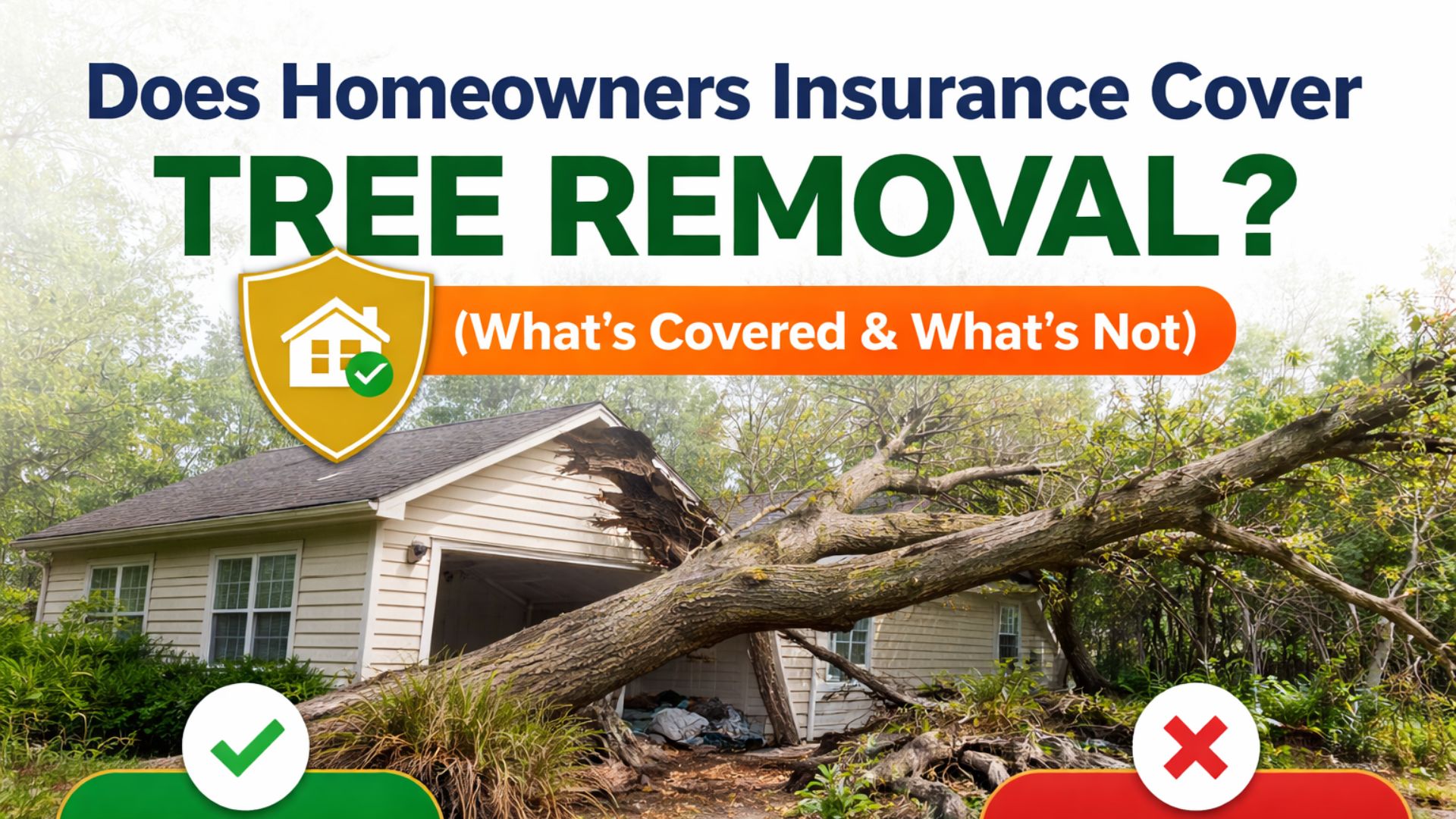
Does Homeowners Insurance Cover Emergency Tree Care?
It depends on the situation, but it covers more than most people think.
Usually covered:
- Tree fell because of a storm, lightning, or a natural disaster
- Tree caused damage to your home, garage, fence, or vehicle
- Debris removal after a covered weather event
Usually not covered:
- Damage caused by a tree that was already visibly diseased or neglected
- Preventative hazard tree removal of a tree that hasn’t actually fallen yet
- A tree that came down in the yard but didn’t hit any structure
Our team can put together written documentation, photos, and a professional report to support your insurance claim and help get the process moving faster.
How to Reduce the Chance of Needing Emergency Tree Care
The best emergency is the one that never happens. A bit of attention during the year goes a long way toward keeping your trees from turning into a crisis.
Schedule An Annual Inspection With A Certified Arborist
A lot of what makes a tree dangerous — root rot, internal decay, structural weakness — isn’t visible from the outside. A trained arborist catches these things early, before they become a fallen tree blocking your driveway at midnight. This is especially important for eucalyptus trees and large native oaks, which are common all across San Diego and Orange County.
Trim Before Storm Season Hits
A thinned-out canopy lets wind move through it instead of pushing against it like a sail. Clearing dead limbs before the Santa Ana winds arrive is one of the most practical things a Southern California homeowner can do — and it’s a lot cheaper than emergency tree trimming after the fact.
Keep An Eye Out For Warning Signs Throughout The Year
Fungal growth at the base, a sudden lean, deep cracks in the trunk, sections that sound hollow when you knock — these are all signs of a tree that’s failing from the inside. If you’re seeing any of these, call for an inspection before you end up needing hazard tree removal under pressure.
Don’t Put Off Removing Dead Or Dying Trees
A tree that’s clearly on its way out is just a liability waiting for the right storm. Scheduled removal is significantly cheaper than emergency tree removal after the damage has already happened.
Save Our Number In Your Phone Right Now
Seriously. Trying to track down a reliable 24-hour emergency tree service at 2 a.m. while there’s a tree on your roof is not where you want to be. Have the number ready before you ever need it.
Why Homeowners Across Southern California Trust Tree Doctor USA
Tree Doctor USA is not a call center that sends a stranger with a chainsaw. We’re a team of certified arborists and emergency tree service professionals based right here in Southern California — people who know the local tree species, understand the seasonal weather, and are familiar with the regulations that apply in each county we work in.
We provide emergency tree service across San Diego, Orange County, Riverside County, and Los Angeles. Homeowners, property managers, commercial properties — we work with all of them, and we’re available around the clock every single day. You can check our areas served page to see exactly where we cover.
Team Tree Doctor USA Is Always Just A Call Away
Wind-toppled tree in Encinitas? Storm damage in El Cajon? Hazard tree removal for an old oak in Rancho Bernardo? A palm snapped by a Santa Ana in National City? A tree leaning toward a house in Riverside? It doesn’t matter when it happens or where in Southern California you are — our 24-hour emergency tree service is ready, so just contact us today without any delay. And if you’re dealing with something right now — call us at (619) 650-6348.
FAQs
In some cases, an uprooted tree repair is possible if the root system is still mostly intact and the tree hasn’t shifted too far. Our arborists will stabilize it with guying, bracing, and root‑zone work—or if it’s too unstable, recommend emergency tree removal to protect your property.
Yes, emergency tree removal usually costs more than a regular, scheduled job. That’s because crews have to drop everything and respond right away—often at night, on weekends, or in bad weather. They also need extra equipment, rigging, and skilled labor to cut a dangerous tree safely around your house or power lines. All of that makes emergency tree removal more expensive than planning a tree cut weeks ahead.
In many cases, yes—but only under certain conditions. If a storm, wind, lightning, or other covered event knocks a tree onto your home, garage, fence, or car, insurance often pays for the removal and some of the damage, up to your policy’s tree‑removal limit.
If the tree was just standing in your yard and hadn’t caused any damage, or if it was clearly diseased or neglected, insurers usually won’t cover it. That means you’d typically pay for preventative or hazard‑tree removal yourself. If you do have storm damage, we can help document the work to support your insurance claim.
Yes. Tree Doctor USA offers emergency tree removal, hazard tree removal, and emergency tree trimming across San Diego, Orange County, Riverside County, and Los Angeles. You can check our full areas served page for specific cities and neighborhoods.
A certified arborist with over 10 years of hands-on experience, I specialize in tree health care, disease diagnosis, risk assessment, and sustainable pruning practices. Through Tree Doctor USA, I help homeowners and businesses protect urban canopies with science-based care, preventive maintenance, and practical guidance that keeps trees healthy, safe, and resilient.