

-
 by Certified Arborist
 - 2 Feb 2026
- Views: 1219
Tree Trimming Cost, Timing & Benefits: What Homeowners Need to Know
Tree trimming is one of the most important — and most misunderstood — parts of proper tree care. Many homeowners delay trimming until branches become hazardous, while others trim too aggressively and unintentionally harm their trees.
Homeowners searching for a reliable tree trimming service or the best tree trimming services near me often want clear answers about cost, timing, and whether professional trimming is truly necessary. This guide explains everything you need to know to make the right decision for your trees, your property, and your safety.
What Is Tree Trimming?
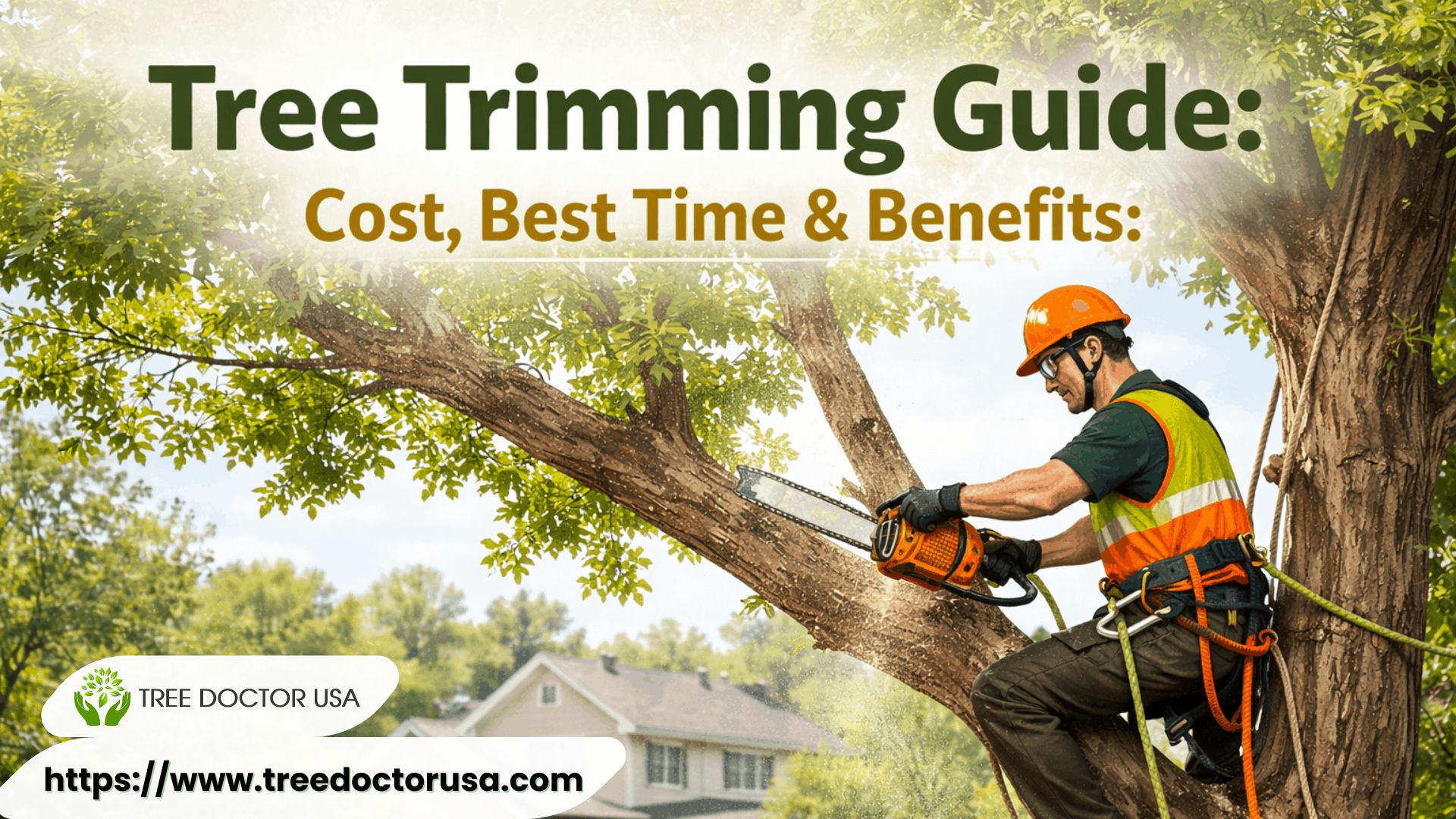
Tree trimming is the selective removal of branches to improve a tree’s health, structure, safety, and appearance. Professional tree trimming helps control overgrowth, remove weak or dangerous limbs, and maintain safe clearance from roofs, sidewalks, and power lines.
A professional tree trimming service ensures trees remain healthy while reducing the risk of property damage or personal injury.
Tree Trimming vs. Tree Pruning
Although often used interchangeably, tree trimming and pruning serve different purposes:
- Tree trimming focuses on shaping, size control, and overall safety
- Tree pruning service removes dead, diseased, or damaged branches to improve tree health
Certified arborists often combine professional tree trimming and pruning services to maintain strong, long-lasting trees.
Best Time to Trim Trees
Trimming trees at the correct time prevents stress, disease, and unnecessary damage.
Best Seasons for Tree Trimming
- Late winter to early spring – Ideal for most trees during dormancy
- Late summer – Helps control excessive growth and remove weak branches
When You Should Avoid Tree Trimming
- During extreme heat
- When trees are actively flowering (species dependent)
- During pest infestations unless handled by a professional tree trimming service
Timing by Tree Type
- Palm trees: Remove only dead or broken fronds
- Shade trees: Best trimmed while dormant
- Fruit trees: Trim after harvest to promote healthy regrowth
Tree Trimming Services Cost: What Homeowners Should Expect
One of the most searched questions online is:
“How much does tree trimming cost?”
Average Tree Trimming Cost
Tree trimming services cost varies depending on the job’s complexity. There is no flat rate because each tree is unique.
Factors That Affect Tree Trimming Services Cost
- Tree height and canopy size
- Tree species and branch density
- Accessibility near buildings or power lines
- Safety risks or storm damage
- Cleanup and debris removal
Choosing an experienced and affordable tree trimming service helps prevent improper cuts that can cause long-term tree damage and higher future costs.
Benefits of Professional Tree Trimming
Hiring professional tree trimming services offers benefits far beyond appearance.
Improves Tree Health
- Removes dead and diseased branches
- Encourages healthy growth patterns
- Improves airflow and sunlight exposure
Enhances Safety
- Prevents falling branches
- Reduces storm-related damage
- Keeps trees away from structures and utilities
Improves Property Appearance
- Creates a balanced, well-maintained canopy
- Boosts curb appeal
- Increases property value
Reduces Pest & Disease Risk
- Eliminates pest nesting areas
- Prevents disease spread
- Maintains stronger tree structure
DIY Tree Trimming vs Hiring a Professional Tree Trimming Service
While small trimming tasks may seem manageable, improper trimming is one of the leading causes of tree decline and safety hazards.
When DIY Trimming Is Acceptable
- Small branches within reach
- Young trees needing light shaping
- No ladders or power tools required
Why Professional Tree Trimming Matters
When homeowners search for the best tree trimming services near me, they should prioritize experience, safety training, and proper equipment over low pricing. Certified professionals understand tree biology, proper cutting techniques, and risk management — protecting both your trees and your property.
How Often Should Trees Be Trimmed?
There’s no universal schedule, but general guidelines include:
- Young trees: Every 1–2 years
- Mature trees: Every 3–5 years
- Fast-growing species: More frequent trimming
- Storm-prone areas: Annual safety inspections
Signs You Need Tree Trimming Services
- Dead or hanging branches
- Branches touching roofs or power lines
- Uneven or overly dense canopies
- Poor growth or leaf discoloration
Tree Trimming Rules & Local Regulations
In many areas, tree trimming is regulated to protect public safety and local ecosystems. Homeowners may need permits for:
- Protected or heritage tree species
- Trees near sidewalks, streets, or utilities
- HOA-governed properties
Professional tree trimming services are familiar with local regulations and help homeowners avoid costly violations.
Final Thoughts
Tree trimming is not just about looks — it’s about protecting your home, improving tree health, and preventing future hazards. Understanding tree trimming services cost, timing, and benefits helps homeowners make informed decisions and avoid unnecessary risks.
Choosing a trusted tree trimming service ensures your trees remain healthy, safe, and attractive year-round.
FAQs
No. When performed correctly, tree trimming improves tree health, structure, and longevity.
Most residential tree trimming jobs take a few hours, depending on tree size and complexity.
Yes, especially for large, mature, or hazardous trees. Certified professionals ensure safe and proper trimming.
Most professional tree trimming services include debris removal, but it’s always best to confirm beforehand.
To find the best tree trimming service near me, look for licensed and insured professionals with strong customer reviews, modern equipment, and experience handling your specific tree types. Local expertise ensures safer trimming and better long-term results.
A certified arborist with over 10 years of hands-on experience, I specialize in tree health care, disease diagnosis, risk assessment, and sustainable pruning practices. Through Tree Doctor USA, I help homeowners and businesses protect urban canopies with science-based care, preventive maintenance, and practical guidance that keeps trees healthy, safe, and resilient.