

-
 by Certified Arborist
 - 14 Apr 2026
- Views: 1375
How To Kill A Tree Stump?
So you had the tree cut down. Great. The yard already looks better. But now there’s that stump sitting there and it’s not going anywhere on its own — and honestly, it’s doing more damage than most people realize.
You should always remember that cutting a tree down doesn’t kill it. The stump is still alive. Give it a few weeks and it’ll start pushing new shoots right out of the base. Some species — maples, willows, poplars — do it fast and aggressively. Before long you’ve got a whole cluster of thin new growth that’s actually harder to deal with than the original tree was.
We talk to a lot of people about this. And the two questions we always get are — what actually works for killing a tree stump, and what’s just a waste of time. So we put this together. Every real method, the honest timeline for each one, what it’ll cost you, and where each one makes sense. We’ve covered the best way to kill tree stump and roots based on the situation, not just one-size-fits-all advice.
Let’s get into it.
Why You Can’t Just Leave The Tree Stump Untreated
Beyond the resprouting issue, there are a few other reasons a stump left untreated becomes a bigger concern over time.
Old stumps attract termites, carpenter ants, and wood-boring beetles. Once those pests move in, a rotting stump near your home can become a gateway — fence posts, deck boards, and in bad cases, structural wood near your foundation. That’s a much bigger problem than the stump itself.
There’s also the practical stuff. A stump is a tripping hazard. It wrecks lawnmower blades. And if it’s sitting where you want to plant something new, it’s not moving unless you make it move.
You might also like : 13 Best Tree Stump Sealers In 2026
So yeah — you need to kill it, remove it, or both.
Method 1 — Cover It With a Tarp (Cheap, Slow, It Works)
This is honestly the laziest method on the list. I don’t mean that as an insult. Sometimes being lazy is fine — especially if you’re not in a rush and the stump isn’t right in the middle of your yard where everyone can see it.
What you’re doing is cutting off all light. A stump still produces energy through photosynthesis as long as light hits the surface. Seal that off completely and you starve it. The stump dies and starts to break down naturally underneath the tarp.
You need a dark, waterproof, opaque tarp — not thin plastic sheeting, something heavy-duty that won’t let any light through. Pull it over the stump completely. Tie rope firmly around the base to keep it sealed tight. Drive stakes into the ground around the edges or use heavy rocks. The wind will try to pull it up, so secure it properly.
Then you wait. Six to eighteen months, realistically. When you come back and the wood is soft and crumbly to the touch, you’re done — it’s well into decomposing.
The downside is obvious. A tarp sitting in your yard for over a year isn’t pretty. But the cost is basically nothing, there are zero chemicals involved, and it won’t harm anything around it. If the stump is somewhere low-traffic and you can be patient, this is genuinely a solid choice for killing a tree stump without spending anything.
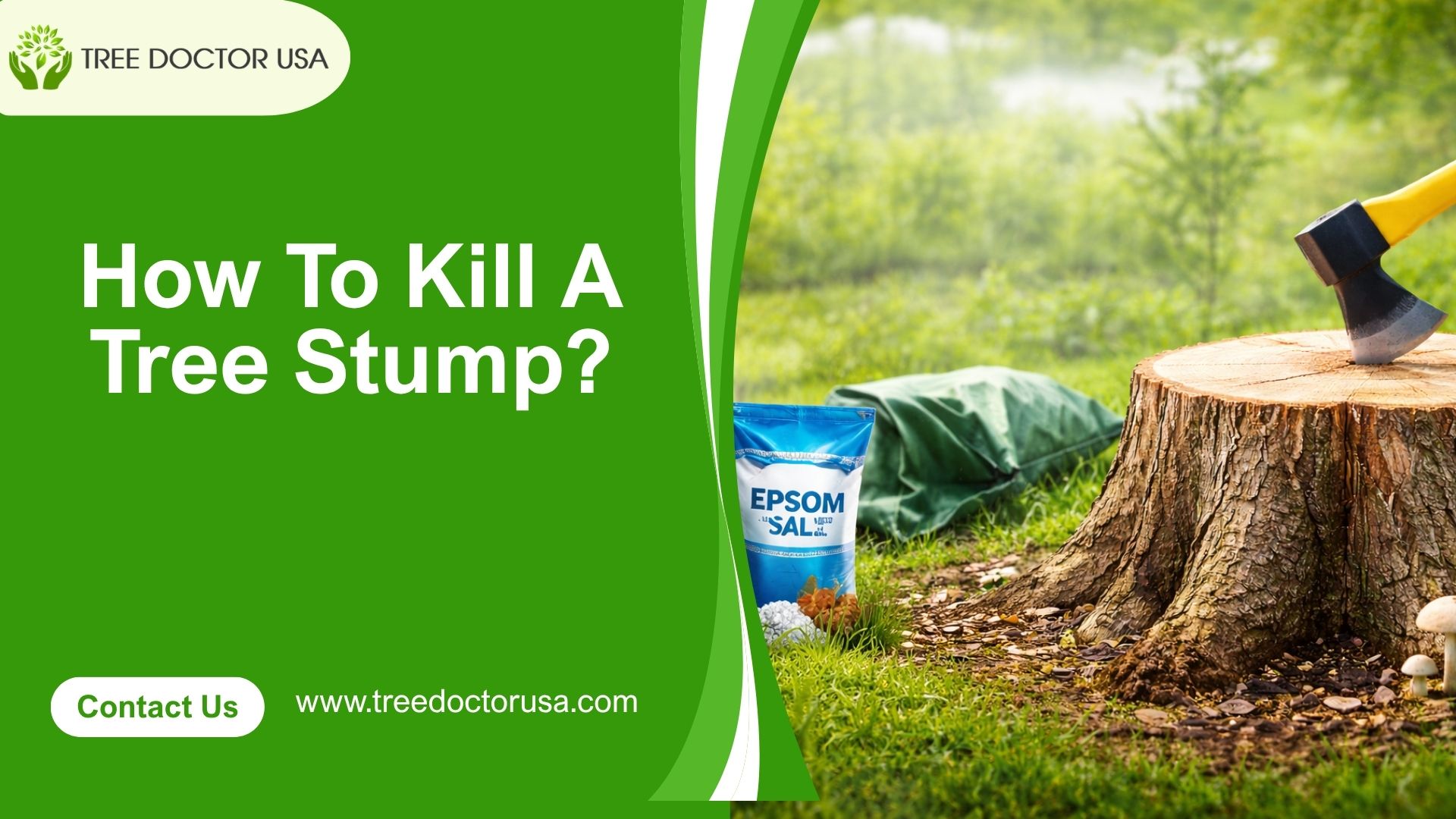
Method 2 — Epsom Salt (The Most Popular DIY Tree Stump Killer)
This is the one people ask about most. And honestly, it deserves the attention because it actually works — and it’s one of the few methods that’s both cheap and genuinely safe for your soil.
Epsom salt is magnesium sulfate. What it does is draw moisture out of the wood cells — the technical word is desiccation. The stump dries out from the inside, the living tissue dies, and decomposition speeds up. Unlike rock salt or table salt, magnesium sulfate doesn’t wreck your soil. It actually adds magnesium and sulfur, which are nutrients your surrounding plants can use. That’s a real difference and worth knowing before you reach for the wrong thing.
Here’s how to do it properly.
Drill as many holes as you can across the top of the stump. Half-inch drill bit, go as deep as your bit allows — at least 8 to 10 inches. Space them a few inches apart and cover the whole surface. The bigger the stump, the more holes you need. Don’t skip this step or go shallow — the salt needs to get into the wood to work.
Pack every hole with Epsom salt and compress it down. Then soak the top of the stump with water from a hose or a pail. You want to dissolve the salt so it absorbs into the wood — but don’t blast it hard enough to wash the salt back out of the holes.
Cover the stump tightly with a waterproof, lightproof tarp. Stake it down. Leave it.
Check back in two to three months. The wood should be noticeably softer — almost spongy. That’s how you know it’s doing its job. For a larger stump, full decomposition might take a bit longer, but you’ll see clear progress.
One warning — don’t use table salt thinking it’s the same. It’s not strong enough to dry out the stump effectively, and it will damage the surrounding soil. Epsom salt only.
If you’re looking for a reliable, low-cost tree stump killer that won’t hurt anything around it, this is where to start.
Method 3 — Herbicide (Fastest Chemical Way To Kill a Tree Stump and Roots)
If you want speed and you’re okay using chemicals, a systemic herbicide is the best stump killer for trees that need to die fast. Specifically, look for products with Triclopyr as the active ingredient. It’s formulated for woody plants and it works.
Here’s why it’s different from the salt methods. A systemic herbicide doesn’t just sit on the surface — it gets absorbed into the living tissue and travels through the whole vascular system, all the way down into the root network. It doesn’t just slow the stump down. It kills it. That’s a meaningful distinction when you’re dealing with a species that likes to resprout aggressively.
What you need: a systemic herbicide labeled for woody plants (Triclopyr), a drill with a half-inch to one-inch bit, a disposable foam paintbrush, rubber gloves, and eye protection. Don’t skip the PPE on this one.
If the stump was recently cut, the fresh surface will absorb the herbicide easily. If it’s been sitting a while and the surface has dried and callused over, drill fresh holes across the top or use an electric sander to open it up. Dried-out wood doesn’t absorb chemicals nearly as well.
Dip the foam brush in the herbicide and paint the entire top surface thoroughly. Work it into every crack and hole. The herbicide draws down into the roots over the next few days. Wrap the brush in paper towels, peel off your gloves, and toss everything in the trash.
Within a few days you’ll see the stump starting to die — wood goes gray, any active shoots wilt and stop. The root system will follow.
Important — Triclopyr will kill other plants it contacts. Be precise with where you apply it. And if you have nearby trees of the same species, don’t use this method without researching whether root grafting is possible. The chemical can travel through shared root systems and kill a tree you wanted to keep. That’s not a hypothetical — it actually happens.
Method 4 — Controlled Burn
This works, but it comes with more conditions than any other method on this list. Read all of this before you decide.
The process uses kerosene to fuel a slow, sustained burn from the inside of the stump outward and downward. Done right, the stump smolders steadily for hours — sometimes a full day — until it becomes ash and charred root material that you shovel out.
Before anything else — call your local government and ask about open burning regulations. In plenty of areas, especially suburban zones or anywhere with seasonal burn bans, this is either illegal without a permit or not allowed at all. And if your stump’s root system runs near a septic tank — skip this method entirely. Roots near septic infrastructure can cause a methane explosion. Not a risk worth taking.
If your area is clear, here’s what you need: kerosene, a drill with a half-inch or one-inch bit, a funnel, long safety matches, a shovel, a fire extinguisher, and a second person with you the entire time.
Clear the ground around the stump for at least 20 feet — rake away every leaf, stick, and dry patch of grass. Drill holes as deep as possible into the stump. Insert a funnel and pour kerosene into each hole until they’re full.
Now stop. Before you light anything — wash your hands of every trace of kerosene and change your clothes if any got on them. Have the second person, who didn’t touch the kerosene, handle the next step.
Use a long safety match, keep your face back, and light the top of the stump. Step back. Don’t add more accelerants. Don’t walk away. The whole point is a slow burn that works downward, not a fast fire. You or your partner need to be present the entire time — this can take up to 24 hours, and root systems can smolder underground for weeks if not properly managed.
Once everything’s fully cooled to ash with zero smoldering, break up remaining root material with a shovel, dispose of burned pieces in a fire-safe container, and fill the hole with fresh soil.
Method 5 — Dig It Out
Manual removal isn’t for every situation — but for stumps under about 12 inches in diameter, it’s completely doable and gives you the cleanest result of any method on this list. No waiting. No chemicals. Just the stump gone and a hole ready to fill.
You’ll need a mattock, pickax, or axe for breaking soil and roots. A hand saw or bow saw for cutting. A hose or pressure washer to clear dirt as you work. Rope or chain if the stump is heavy, and a vehicle if needed.
Start by digging a trench around the stump — about one to two feet out from the base, deep enough to expose the major lateral roots. A garden hose helps here. Washing dirt away as you dig saves a lot of time and lets you actually see what you’re cutting.
Once roots are exposed, cut them — pruning saw for smaller ones, bow saw or chainsaw for thick ones. Go around the whole stump, cutting and clearing on each side.
Keep digging inward and down until you hit the taproot. That’s the main vertical anchor root. Clear the dirt off it, then cut it. Once that’s severed and the lateral roots are cleared, the stump is free.
Small stumps you can usually rock out by hand. Anything heavier — loop a chain or rope around the base and use a vehicle or come-along winch to pull it. Keep everyone clear of the chain while it’s under tension. Chains under load that slip or snap cause serious injuries. This isn’t something to rush.
Fill the hole with clean soil once the stump is out.
Method 6 — Stump Grinding (Fastest Complete Removal)
If you want the stump fully eliminated — not just dead, but physically gone — renting a stump grinder is the fastest way to make that happen. It’s also what professional tree services use when they remove stumps as part of a job.
A stump grinder uses a rotating cutting wheel to chew the stump into chips, typically going 6 to 12 inches below ground. The stump ceases to exist. No waiting for it to rot, no digging by hand.
Rental cost runs $60–$90 for four hours, $200–$400 per day depending on the size of the machine. Full PPE is non-negotiable when operating one of these — hard hat with face shield, ear protection, heavy gloves, steel-toed boots. Keep everyone else at least 50 feet back. The machine throws wood fragments at speed.
Measure the stump first. The grinder works best on stumps no taller than 14 inches from the ground. If yours is taller, cut it down with a chainsaw first.
Roll the machine up, position the blade, and work it back and forth across the stump in overlapping passes. Clear chips periodically. Keep going until there’s a clean cavity and no stump or root material left above grade.
Fill the hole with the wood chip material, or bring in fresh topsoil if you’re replanting over the spot.
One thing to know about soil after grinding — all those wood chips decompose slowly and tie up nitrogen as they do. If you’re seeding grass or planting a new tree over the spot, mix nitrogen fertilizer into the backfill or wait at least a year. Planting straight into fresh stump grindings usually doesn’t go well.
Professional stump grinding service typically runs $4–$6 per inch of stump diameter. A 20-inch stump is roughly $80–$120. Doing it yourself with a rental is cheaper — just be honest with yourself about your comfort level operating the equipment.
What About Potassium Nitrate Products — Are They Worth It?
Walk into any hardware store and you’ll see stump remover products on the shelf — Spectracide Stump Remover is the most common one. These use potassium nitrate as the active ingredient.
Potassium nitrate is hygroscopic, meaning it pulls moisture from wood cells and also feeds the microorganisms that decompose wood. You drill holes, pour in granules, add water, wait. It’s a legitimately effective tree stump killer for people who don’t need the stump gone fast. Spectracide runs about $9–$12 for a one-pound container. Bonide Stump-Out uses sodium metabisulfite and does something similar, same price range.
The honest caveat: neither of these removes a stump. They rot it in place over one to three years. When the wood finally becomes soft and spongy enough, you break it apart with a shovel or axe. If the timeline works for you and you’re not in a rush, they’re a perfectly reasonable option — especially for killing a tree stump that’s in an out-of-the-way spot.
What Flat-Out Doesn’t Work (And Makes Things Worse)
A few things come up repeatedly that we need to address directly.
Bleach — doesn’t effectively kill a tree stump. It leaches into the soil and permanently damages soil chemistry, kills beneficial microorganisms, and can harm nearby plants. Don’t use it.
Motor oil or fuel — same problem. No reliable stump-killing effect, real contamination risk for soil and groundwater. Not worth it.
Table salt or rock salt — technically kills stumps eventually but destroys the surrounding soil in the process. Sodium accumulates and prevents healthy plant growth for years afterward. If you want a salt-based method, use Epsom salt. It’s genuinely different and it doesn’t trash the ground around it.
So What’s the Best Way To Kill Tree Stump — For Your Situation?
Here’s the straight version.
Need it gone fast and willing to spend money — rent a stump grinder or call a tree service. Cleanest, fastest option.
Want the fastest chemical result — Triclopyr herbicide. It’ll kill the stump and roots within days. The physical wood still rots away in its own time, but the stump is dead.
Want cheap and low-effort, okay with waiting — Epsom salt or tarp method. Several months minimum, but close to zero cost and completely safe.
Small stump and you want it fully out right now — dig it out. A few hours of hard work and the hole is ready to fill the same day.
Rural location, burning is legal, stump is far from anything flammable — controlled kerosene burn is an option. Just don’t treat it casually. It requires real preparation and someone present the whole time.
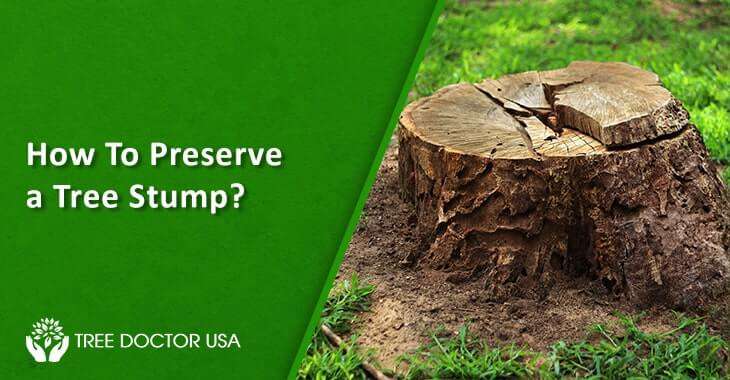
Also read : How To Preserve a Tree Stump?
After the Stump Is Gone
This part gets skipped a lot, and it causes problems down the line.
Fill the hole with clean topsoil or a soil-compost mix. Tamp it down as it settles over the first few weeks because it will sink. If you want to replant in the exact same spot, give it at least one to two years. Decomposing root material underground keeps changing the soil structure, and it’s not ideal for a new tree during that time. If you have to plant sooner, clear out as much old wood material as possible, bring in generous amounts of fresh soil and compost, and add a nitrogen supplement.
And watch for new shoots. If green growth comes up from the base after you’ve treated the stump, there’s still live root material down there. Cut the shoots immediately and apply herbicide directly to the freshly cut surface. Keep doing it. Repeating that process consistently over a season or two will exhaust even the most stubborn root system.
Try the Best Stump-Killing Methods Now!
Contact Us : (619)304-8614
FAQs
Yes, Spectracide Stump Remover (potassium nitrate) accelerates decomposition in 1-3 years by feeding microbes, ideal for non-rush US jobs. It’s safe for surrounding grass and available nationwide.
It depends on state and local rules—often restricted in California and Florida because of fire risks, requiring permits elsewhere like Alachua County. Check local fire services first, as bans apply in suburban areas.
Yes, Epsom salt desiccates stump cells by drawing out moisture, softening wood in 2-3 months without harming soil—unlike table salt. It’s widely available at US retailers like Home Depot and adds beneficial magnesium/sulfur to yards.
A certified arborist with over 10 years of hands-on experience, I specialize in tree health care, disease diagnosis, risk assessment, and sustainable pruning practices. Through Tree Doctor USA, I help homeowners and businesses protect urban canopies with science-based care, preventive maintenance, and practical guidance that keeps trees healthy, safe, and resilient.